Why Is My Car’s Alternator Failing in Sonoma? What Drivers in the Valley Need to Know About Charging System Problems
If you’ve been dealing with a battery that keeps dying — even after you replaced it — the alternator is probably the real problem. This is one of the most common misdiagnoses we see from drivers in Sonoma, Glen Ellen, Kenwood, and Boyes Hot Springs: they replace the battery, feel relieved for a week, then end up stranded again. The battery wasn’t the root cause. The alternator had quietly stopped keeping it charged. Here’s what’s actually going on, how to recognize the signs early, and why getting the right diagnosis the first time saves you real money.
What Does an Alternator Actually Do?
Your battery starts the car. Your alternator keeps everything running once it’s started. While the engine is running, the alternator spins (driven by the serpentine belt) and generates electricity that powers your lights, climate control, infotainment system, and every other electrical component — while simultaneously recharging the battery. If the alternator isn’t producing enough voltage, your car starts drawing down the battery instead. Eventually, the battery goes flat, and the car dies.
It’s a simple system, but when it starts to fail, the symptoms can look like half a dozen different problems — which is exactly why a proper charging system test matters more than just swapping parts.
Warning Signs Your Alternator Is Going Bad
Here’s what to watch for. Some of these are subtle early-stage symptoms; others mean you’re already close to getting stranded on the side of Arnold Drive or pulled over on Highway 12 heading back from the valley.
- Dimming or flickering headlights: This is one of the clearest signs. If your lights dim when you’re idling and brighten when you rev the engine, the alternator isn’t generating enough power at low RPMs.
- Battery warning light on the dash: That light isn’t just about the battery — it monitors the entire charging system. If it comes on and stays on, get it tested soon.
- Repeated dead batteries: If you’ve already replaced the battery once or twice in the past year and it keeps dying, stop replacing the battery. Get the alternator tested.
- Whining or grinding noise from under the hood: A failing alternator bearing often produces a steady whine or growl that changes pitch with engine speed. Don’t ignore this one — bearings don’t get better on their own.
- Electrical gremlins: Power windows moving slowly, the radio cutting out, dashboard lights flickering, or the AC suddenly acting weak — all of these can point to insufficient voltage from a struggling alternator.
- Car stalls or dies while driving: If the alternator has completely failed, the car will eventually run the battery flat and stall, even at highway speed. This is the worst-case version of an ignored problem.
Battery or Alternator — How Do You Tell the Difference?
This is the question most drivers ask, and it’s the right one. The short answer: a simple charging system test at a shop will tell you definitively. What you can look for on your own:
If your car won’t start but jumps right off and stays running — the battery is likely the problem. If your car jumps off fine but dies again within 20 or 30 minutes of driving, the alternator isn’t recharging it while you drive. That’s the key difference.
A healthy alternator puts out between about 13.5 and 14.7 volts while the engine is running. You can check this with a basic multimeter at the battery terminals. If you’re reading 12.4 volts or less with the engine running, the alternator isn’t doing its job. Our auto diagnostic services include a full charging system test — we’ll tell you exactly what’s failing and what isn’t, so you’re not replacing parts that don’t need replacing.
Why Sonoma Valley Drivers See This More Than They’d Expect
Drivers in and around Sonoma, including folks commuting from Kenwood and Glen Ellen toward Santa Rosa or down toward Boyes Hot Springs, tend to rack up a lot of short-trip miles on rural roads. Short trips are actually harder on your charging system than highway miles — the alternator doesn’t get enough sustained run time to fully recharge the battery after startup. Do that daily for a few years, and you’re accelerating wear on both components.
The summer heat here in Sonoma Valley doesn’t help either. High underhood temperatures shorten the lifespan of alternator diodes and bearings. If your car sits in the sun all day during harvest season and you’re making multiple short runs to tasting rooms or local errands, the alternator is working harder and cooling down less. We’ve seen this pattern enough times that it’s worth mentioning to anyone with a vehicle over 80,000 miles in this area.
Wine Country tourism also means a real mix of vehicles on these roads. Rental cars and out-of-area visitors who break down near Sonoma Plaza or out on Sonoma Highway often need same-day diagnosis — something On Site Auto Repair has been handling for drivers across the county since 2011.
What a Fair Alternator Repair Should Look Like
One thing that frustrates people — and honestly, us too — is when a shop replaces both the battery and alternator just to be safe when only one is actually failing. That’s not necessary if proper testing is done first. A charging system test takes minutes. There’s no reason to guess.
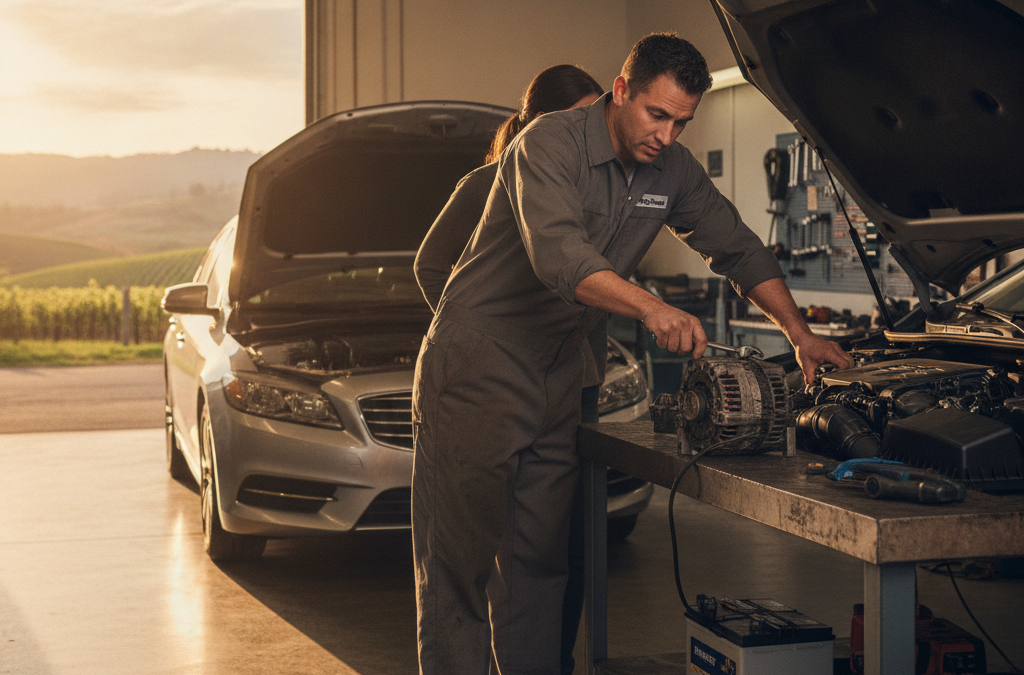
If the alternator does need to be replaced, the repair involves removing the serpentine belt, disconnecting the old unit, and installing a new or remanufactured alternator. On most vehicles it’s a few hours of labor. Some makes, like certain Honda and Toyota models, are straightforward. Others — some German vehicles, certain Subarus — have tighter access that adds time. We’ll give you an honest estimate before we touch anything, and we don’t upsell parts you don’t need.
If the serpentine belt is worn or cracked and the alternator is already out, it usually makes sense to replace the belt at the same time since the labor is already done. That’s the kind of honest recommendation we make — not padding a ticket, just practical advice. You can learn more about our approach to preventive maintenance and how we handle repairs across all makes and models.
How Long Do Alternators Last?
Most alternators last somewhere between 80,000 and 150,000 miles, though it varies quite a bit by make, model, and driving habits. Short-trip driving, extreme heat, and aftermarket audio systems or accessories that increase the electrical load can all shorten that lifespan. If you’re driving a higher-mileage vehicle — say, over 120,000 miles — and you haven’t had the charging system tested recently, it’s worth adding to your next service visit.
For drivers in the Sonoma Valley area running older domestic trucks or higher-mileage Hondas, Toyotas, or Subarus, this is exactly the kind of item that catches people off guard because there’s often no dramatic warning — just a slow decline until the battery finally gives out one morning.
Frequently Asked Questions
Can I drive with a bad alternator?
Technically yes, for a short time — but you’re running purely on battery power, which will deplete quickly. In most vehicles you’ll have maybe 20 to 45 minutes before the car stalls. Don’t push it. If you suspect your alternator has failed, drive directly to a shop or call for a tow.
Will a new battery fix the problem if the alternator is bad?
No. A new battery will buy you a little time, but if the alternator isn’t recharging it, you’ll be back to square one within days. Always test the charging system before replacing parts.
How much does alternator replacement cost?
It varies by vehicle. We don’t publish flat-rate prices because the labor time genuinely differs between a straightforward domestic pickup and a compact European sedan with a tight engine bay. We’ll give you a free estimate before any work starts — no surprises.
My check engine light isn’t on — could it still be the alternator?
Yes. The battery warning light is the one most associated with charging system issues, but it doesn’t always trigger the check engine light. A charging system test is the only reliable way to know.
Do you service alternators on all vehicle makes?
Yes. We work on all makes and models — Toyota, Honda, Subaru, Ford, Chevy, Nissan, Volkswagen, Jeep, Lexus, Hyundai, and more. If you drive it, we can diagnose it.
Get Your Charging System Checked Before You’re Stranded
If you’re dealing with a battery that won’t hold a charge, flickering lights, or a whining noise from the engine bay, don’t guess and don’t keep replacing parts hoping one of them fixes it. A proper diagnosis takes a few minutes and gives you a clear answer. On Site Auto Repair serves drivers in Sonoma, Glen Ellen, Kenwood, Boyes Hot Springs, and all across Sonoma County — and we’ve been doing honest, straightforward repairs since 2011. Contact us today to schedule a free charging system test or get an estimate. We’ll tell you exactly what’s going on and what it actually takes to fix it.