Why Are My Tires Wearing Unevenly in Cotati? What Sonoma County Drivers Need to Know About Tire Wear Patterns
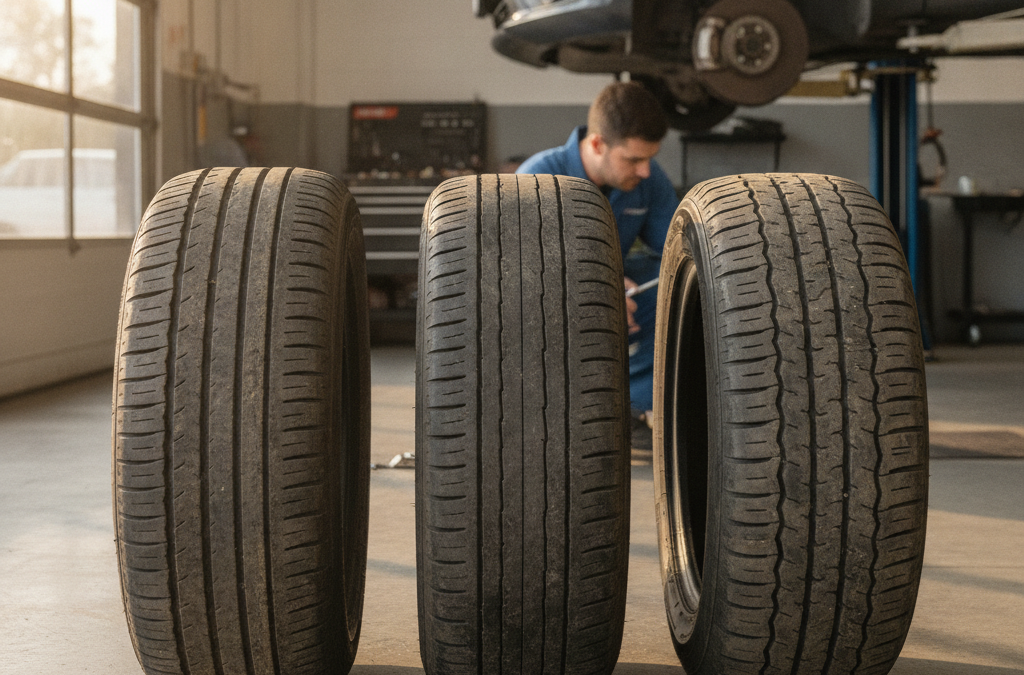
If you’ve crouched down next to your car recently and noticed that your tires look worn down on one edge, or have a scalloped, bumpy texture across the tread, or are bald in the middle but still have rubber on the sides — that’s uneven tire wear, and it’s your car trying to tell you something. For drivers in Cotati, Rohnert Park, and the broader Sonoma County area, this is a more common issue than you’d think. The combination of Highway 101 commutes, pothole-riddled city streets, and varying road conditions across the region puts real stress on tires and the systems that support them.
The good news is that tire wear patterns are actually pretty readable once you know what to look for. Each pattern points to a specific cause, and most of them are fixable before you end up buying a new set of tires prematurely.
What Each Tire Wear Pattern Actually Means
Not all uneven wear looks the same, and that matters — because the fix depends on what’s causing it. Here’s how to read what you’re seeing:
Wear on One Edge Only (Inner or Outer)
This is the most common pattern, and it almost always points to an alignment issue. When your camber — the angle at which your tires sit against the road — is off, the tire leans too far in or out and puts pressure on one edge. You’ll often feel this as your car drifting subtly to one side while driving, especially on a straight highway stretch. Driving the 101 corridor between Cotati and Petaluma regularly makes this kind of drift very noticeable.
Toe misalignment (whether your tires are angling inward or outward like a pigeon-toe or splayed-foot stance) also causes edge wear, often in a feathered or saw-tooth pattern along the tread blocks.
Wear in the Center of the Tread
If the middle of the tire is worn down but the edges still have tread, your tires have been consistently over-inflated. An overinflated tire balloons out in the center, putting more of the contact patch on the middle strip. This is especially common after a trip to a quick-lube shop where techs inflate to max PSI on the sidewall rather than the manufacturer’s recommended pressure in your owner’s manual or door jamb sticker.
Wear on Both Outer Edges
The opposite problem — chronic under-inflation. When tires are soft, the sidewalls flex too much and the outer edges bear the load. This also generates excess heat, which accelerates wear and can lead to blowouts. Cotati drivers who don’t check tire pressure regularly through the temperature swings between cool Sonoma County winters and hot dry summers often end up in this situation.
Cupping or Scalloping (Wavy or Dipped Pattern)
This one sounds and feels like a rhythmic thudding or vibration, especially at highway speeds. Cupping — also called scalloping — happens when your shock absorbers or struts are worn out. Instead of keeping the tire in consistent contact with the road, the suspension bounces slightly, causing the tire to skip and wear in uneven patches. If you’re feeling a shimmy at 60 mph on the freeway or hearing a subtle thump-thump-thump from the rear, worn shocks are a likely culprit.
Diagonal or Patchy Wear
This one’s less straightforward and can involve a combination of factors — worn ball joints, loose tie rod ends, or a tire that hasn’t been rotated in a long time. Diagonal wear often shows up on vehicles that sit for extended periods or on higher-mileage cars where multiple front-end components are starting to age together.
Why This Matters More Than Just Replacing the Tires
Here’s what a lot of drivers miss: if you replace tires without fixing the underlying cause, your new tires will wear unevenly in exactly the same way. You’ll be spending money on rubber that gets destroyed by the same alignment or suspension problem you didn’t address. A fresh set of all-season tires on a car with bad camber or shot struts will be showing premature wear within 10,000 miles.
That’s why tire service and alignment work go hand in hand. Before putting new tires on any vehicle, a thorough inspection of steering and suspension components should be part of the conversation.
The Sonoma County Factors That Speed This Up
A few things about driving in this area genuinely accelerate tire wear — and uneven wear specifically:
- Highway 101 commutes: Long daily drives between Cotati, Rohnert Park, Santa Rosa, and Petaluma log mileage fast. High-speed driving amplifies the effects of any existing alignment problem.
- Road surface variation: Country roads leading to wineries and rural routes near Petaluma and Sonoma Valley can be rough, with cracked pavement and unexpected dips that knock alignment out over time.
- Temperature swings: Cool, damp winters followed by dry summer heat cause tires to lose pressure more dramatically than in milder climates. A tire that was properly inflated in January may be noticeably low by August.
- Potholes near railroad crossings and older Cotati streets: A single hard pothole impact can knock your front-end alignment noticeably out of spec.
When Should You Actually Come In?
You don’t need to wait for a blowout or a loud vibration to get this checked. Here are the practical checkpoints to watch for:
- You can see a visible difference in wear depth between the inner and outer edges of any tire
- Your steering wheel isn’t centered when driving straight
- You feel a vibration or shimmy at highway speeds that wasn’t there before
- Your car is past 5,000 to 7,500 miles since its last tire rotation
- You recently hit a significant pothole, curb, or road debris
- You’ve replaced tires in the last year and they’re already showing unusual wear
Getting an alignment check and a tire inspection at the same time takes less than an hour and can save you hundreds of dollars in premature tire replacement. Our steering and suspension service includes a thorough check of all the components that directly affect how your tires meet the road.
What Competitors Often Skip: The Wear Pattern Diagnosis Conversation
One thing that’s genuinely missing from most local shop websites — and we checked — is any real explanation of how to diagnose what’s causing your tire wear before you spend money. Most pages just say “get an alignment” or “rotate your tires” without explaining what you’re actually seeing or why it matters. That’s a problem, because a driver who understands that their cupped rear tires mean worn shocks is going to make a smarter decision than one who keeps buying new tires hoping it fixes itself.
When you bring your vehicle in to On Site Auto Repair, we walk you through what we’re seeing. You’ll understand exactly what’s causing the wear, what the fix involves, and what it’ll cost before we do anything. No surprises, no pressure.
Frequently Asked Questions About Uneven Tire Wear in Sonoma County
How often should I rotate my tires in Cotati or Rohnert Park?
Every 5,000 to 7,500 miles is the standard recommendation for most vehicles. If you’re doing a lot of highway driving on the 101, rotating on the lower end of that range helps even out wear between front and rear tires.
Can I just add air if my tires are wearing on the edges?
If the wear is on both outer edges, yes — under-inflation is likely the cause and correcting your tire pressure can stop further damage. But if the wear is only on one edge, that’s an alignment issue and adding air won’t fix it.
How long does a wheel alignment take, and do I need an appointment?
A standard alignment typically takes about 45 to 60 minutes. We recommend calling ahead so we can get you in without a long wait, especially during busy summer months when Wine Country tourism traffic picks up and more out-of-area vehicles are on local roads.
My car feels fine to drive — does uneven wear still matter?
Yes. Mild alignment problems and early suspension wear often don’t produce dramatic symptoms until the problem is advanced. By the time you feel it clearly, you may already have significantly shortened the life of your tires and stressed related components.
Do you service all vehicle makes for tire and suspension work?
Yes — we work on everything from Toyotas and Hondas to Subarus, Fords, Chevys, Nissans, and most foreign and domestic vehicles. Whether you’re driving a daily commuter or a family SUV, the tire wear diagnostic process is the same.
Ready to Get Your Tires Checked?
If you’re seeing uneven tread, feeling a vibration, or your car’s been pulling subtly to one side, don’t wait for a flat to take action. On Site Auto Repair serves drivers throughout Cotati, Rohnert Park, Santa Rosa, Petaluma, and the surrounding Sonoma County area. We’ll take a look, tell you exactly what we find, and give you an honest estimate — no upselling, no pressure. Reach out today to schedule your tire inspection or request a free estimate.