Why Is My Car’s Automatic Transmission Slipping or Shifting Hard in Santa Rosa? What Sonoma County Drivers Need to Know
If you’ve noticed your car revving up without picking up speed, hesitating before it finds the next gear, or thudding into drive like it’s annoyed at you — your automatic transmission is trying to get your attention. In Santa Rosa, where a typical day might include crawling through downtown traffic, climbing the grades toward Fountaingrove, and merging onto a busy stretch of Highway 101, your transmission works harder than most people realize. The good news is that catching these symptoms early can save you from a very expensive repair down the road. Here’s what’s actually going on, what causes it, and when you need to bring it in.
What Does Transmission Slipping Actually Feel Like?
Transmission slipping doesn’t always feel dramatic. Sometimes it’s subtle — the engine RPMs climb higher than usual before the gear catches, almost like the transmission momentarily lost its grip. Other times you might feel the car coast or hesitate when you hit the gas, then lurch forward once it finally finds the right gear. In more advanced cases, the transmission may drop out of gear entirely while you’re driving, or you’ll notice it shifting back and forth between gears at low speeds without a clear reason.
Hard or rough shifting is a related but slightly different problem. Instead of slipping, the transmission clunks or jerks sharply when it changes gears — sometimes hard enough that you feel it in your seat. This is more common when pulling onto the freeway or during downshifts when you’re slowing for a stop. Both symptoms point to something wrong inside the transmission, but the cause — and the cost to fix it — can vary quite a bit.
The Most Common Causes of Slipping and Hard Shifting
Low or Degraded Transmission Fluid
This is the first thing any honest mechanic is going to check, and it’s the most common culprit. Automatic transmission fluid (ATF) does a lot of jobs at once — it lubricates internal components, transfers hydraulic pressure to shift gears, and helps keep everything cool. When the fluid gets low (from a leak) or breaks down from age and heat, the transmission can’t do its job cleanly. Shifts become sloppy, the clutch packs inside start slipping, and friction-related damage starts accumulating.
Fluid degradation is a real issue on long Highway 101 commutes to the Bay Area. Stop-and-go traffic heats ATF up fast, and if you’re driving 50 or 60 miles each way every day from Windsor or Rohnert Park, that fluid is working overtime. Most manufacturers recommend a transmission fluid service somewhere between 30,000 and 60,000 miles — but many drivers in Sonoma County go well past that without ever touching it.
A Dirty or Failing Transmission Filter
Many automatic transmissions have an internal filter that traps metal particles and debris as the fluid circulates. Over time, that filter can clog, restricting fluid flow and causing pressure drops that lead to soft, slipping shifts. A transmission service — which includes draining the old fluid, replacing the filter, and refilling with fresh ATF — often resolves early-stage slipping issues before they turn into internal damage.
Worn Clutch Packs or Bands
Inside your automatic transmission, a series of friction clutch packs and metal bands are what actually engage each gear. As these wear down over time, they lose their grip — which is exactly what causes that slipping sensation where the engine revs but the car doesn’t accelerate. This is mechanical wear, and unlike a fluid change, it requires internal transmission work to fix properly.
Faulty Transmission Solenoids
Modern automatic transmissions rely on electronically controlled solenoids to regulate fluid flow and manage shift timing. When a solenoid fails or gets stuck, it can cause erratic shifting, slipping between gears, or a transmission that gets stuck in one gear entirely. This is a repair that requires proper diagnostic scanning — not just a fluid top-off — to identify which solenoid is at fault. If your check engine light is on alongside the shifting problem, a proper diagnostic scan is usually the best place to start.
Why Hilly Terrain in Santa Rosa Makes This Worse
If you live or drive regularly through Bennett Valley, Oakmont, or up toward Fountaingrove, your transmission is dealing with grades that put real strain on both the fluid and the mechanical components. Climbing a steep hill at low speeds forces the transmission to hold lower gears longer and generate more heat. Descending means the transmission may be called on to engine-brake, adding more stress. Over time, this kind of repeated thermal cycling accelerates wear on clutch packs and degrades fluid faster than flat freeway driving would.
Drivers in Sebastopol and out toward the Russian River Valley face similar conditions on winding two-lane roads — the kind of roads where you’re constantly adjusting speed and the transmission never quite settles into a comfortable cruising gear. If you’re running those routes regularly, being proactive about transmission fluid service pays off.
The Gap Most Local Shops Don’t Fill: What to Expect From a Transmission Service vs. a Transmission Repair
Here’s something that tends to be underexplained at a lot of shops: there’s a meaningful difference between a transmission fluid service and an actual transmission repair, and knowing which one you need matters.
A transmission fluid service — draining or flushing the old ATF, replacing the filter if accessible, and refilling with fresh fluid — is preventive maintenance. It’s relatively affordable, takes an hour or two, and can absolutely resolve early slipping symptoms caused by degraded fluid. If your transmission fluid is dark brown, smells burnt, or looks milky, a service is often the first step.
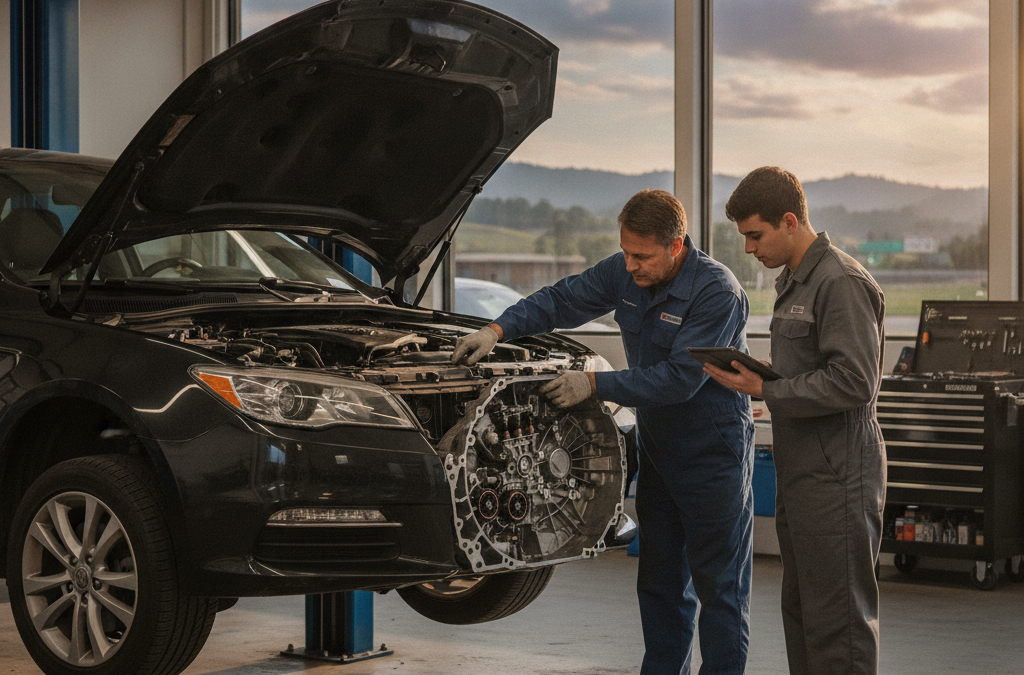
A transmission repair involves actually opening up the unit to replace worn clutch packs, bands, solenoids, or other internal components. This is a more involved job that costs significantly more and takes longer. A good shop will be upfront with you about which one you actually need — they won’t automatically push you toward a rebuild when a fluid service might buy you another 50,000 miles.
At On-Site Auto Repair, we start with a thorough inspection and honest conversation before we recommend anything. If a fluid change is the right call, that’s what we’ll tell you. If there’s internal damage that a fluid change won’t fix, we’ll explain that clearly so you can make an informed decision.
Learn more about our transmission repair services in Santa Rosa and Sonoma County.
Which Vehicles Are Most Prone to These Problems?
Certain makes and models show up more often than others when it comes to automatic transmission issues in Sonoma County:
- Ford F-150 and Explorer: The 6R80 and 10-speed transmissions in late-model Fords are capable but sensitive to fluid condition. Fluid changes on schedule matter a lot here.
- Nissan Pathfinder and Murano (2003–2010): The CVT transmissions in this era have a well-documented tendency to fail, especially when fluid service is delayed.
- Chevy and GMC trucks: The 6L80 transmission found in many full-size GM trucks can develop hard shifting issues tied to solenoid wear and fluid breakdown.
- Honda CR-V and Accord (CVT): Honda’s newer CVT transmissions run smoothly when serviced but can produce shuddering or hesitation when fluid is overdue.
- Jeep Grand Cherokee: The 8-speed ZF transmission is smooth when healthy but can exhibit hesitation and hard cold shifts when fluid has degraded.
That said, any automatic transmission — regardless of brand — can develop slipping or shifting problems when fluid service is skipped or ignored long enough.
What You Can Do Right Now
If you’re experiencing slipping or rough shifts, here’s a practical starting point:
- Check your transmission dipstick (if your vehicle has one) — look for fluid that’s bright red and slightly sweet-smelling. Dark brown or burnt-smelling fluid needs attention.
- Note when the symptoms happen — cold starts, highway driving, stop-and-go, or all the time. This information helps your mechanic narrow down the cause faster.
- Don’t ignore it hoping it gets better on its own. Transmission problems almost never improve without intervention, and early-stage slipping caused by fluid issues can become mechanical damage if left alone long enough.
- Avoid aggressive driving or towing until you’ve had it inspected — hard acceleration and heavy loads put additional stress on an already-struggling transmission.
If your check engine light is on, that makes it even more important to get a scan done. Transmission-related fault codes can point directly to the problem — whether it’s a specific solenoid, a speed sensor, or a pressure issue — and that saves diagnostic time.
Frequently Asked Questions
How much does a transmission fluid service cost in Santa Rosa?
The cost varies depending on your vehicle’s transmission type, the ATF specification required, and whether the filter is replaceable. It’s a much smaller number than a transmission rebuild, which is exactly why staying current on fluid service makes financial sense. Contact us for a free estimate specific to your vehicle.
Can I drive my car if the transmission is slipping?
It depends on how severe it is. Mild, occasional slipping might get you to a shop safely — but if it’s happening frequently, the car is losing power, or you’re stuck in one gear, stop driving it and get it looked at. Continuing to drive on a slipping transmission can turn a fixable fluid issue into a full rebuild.
Does a transmission fluid flush actually help, or is it a money grab?
Done at the right time, a fluid service is genuinely valuable preventive maintenance. Done on a transmission that already has significant internal damage, it won’t fix the underlying problem — and some shops use it as a way to collect a fee without solving anything. We’ll always tell you honestly whether a fluid service is appropriate for your situation or whether something more is needed.
My car shifts fine when it’s warm but slips when it’s cold. What does that mean?
Cold-start slipping or harsh shifting that smooths out after the transmission warms up often points to degraded fluid that’s lost its viscosity, a sticky solenoid, or worn valve body components. It’s worth getting checked — especially heading into a Sonoma County winter where cold mornings are the norm from November through March.
I drive from Petaluma to Santa Rosa every day. How often should I service my transmission?
For a daily Highway 101 commuter putting on significant miles in stop-and-go traffic, we’d lean toward the more conservative end of your manufacturer’s recommendation — generally every 30,000 to 45,000 miles depending on the vehicle. Heat and load cycles add up faster than you’d think on a commute like that.
Bring It In Before It Gets Expensive
Automatic transmission problems are one of those repairs where timing really matters. Catch it early — when it’s a fluid issue or a single bad solenoid — and you’re looking at a manageable service. Wait until there’s significant internal wear, and the options get fewer and the costs get much higher. We’ve been serving Santa Rosa and the surrounding area since 2011, and we’ve seen both outcomes. The drivers who do best are the ones who bring it in when something feels off, not when something stops working entirely.
If your transmission is slipping, shifting hard, or just doesn’t feel right, reach out to On-Site Auto Repair for an honest assessment and a free estimate. We work on all makes and models — domestic, foreign, newer, and older — and we’ll tell you straight what your car actually needs.