Why Is My Car’s Brake Caliper Sticking or Dragging in Rohnert Park? What Sonoma County Drivers Need to Know
If your car is pulling to one side when you drive, your wheels feel hot after a short trip, or you’re noticing a burning smell that wasn’t there before — a sticking or seized brake caliper is one of the most likely culprits. It’s a surprisingly common problem that Sonoma County drivers deal with, and it’s one that tends to get overlooked until it causes real damage. Here’s what’s actually happening, why it happens more in certain driving conditions, and what you should do about it.
What Does a Brake Caliper Actually Do?
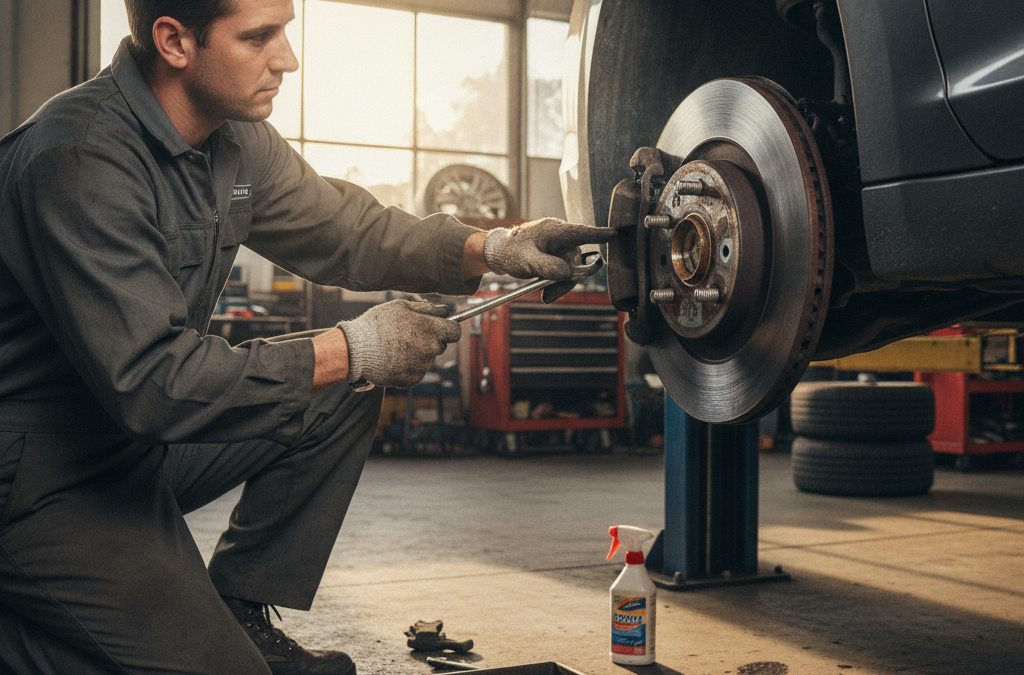
Your disc brake system uses a caliper — essentially a hydraulic clamp — to squeeze brake pads against the rotor when you press the pedal. When everything works the way it should, the caliper releases that pressure as soon as you let off the brake, and your wheel spins freely. A sticking or dragging caliper is one that doesn’t fully release. Instead, it keeps light pressure on the rotor even when you’re not braking, which causes constant friction, heat, and premature wear.
The problem can happen on just one wheel or multiple wheels, and it can range from a mild drag to a full seizure where the caliper is essentially locked on. Either way, it’s putting unnecessary load on your engine, burning through your brake pads faster than normal, and in worse cases, warping or destroying your rotors.
Warning Signs You Shouldn’t Ignore
The tricky thing about a sticking caliper is that the symptoms can look like several other issues. Here’s what to watch and feel for:
- The car pulls to one side while driving — not just when braking, but while cruising normally. This is one of the clearest caliper drag signs.
- One wheel is noticeably hotter than the others after driving. If you park and carefully hold your hand near (not on) each wheel, a seized caliper will make one wheel radiate significantly more heat.
- A burning smell that seems to come from one corner of the car, especially after highway driving or a longer commute.
- Reduced fuel economy — when a caliper is dragging, your engine works harder to move the car against that resistance. Some drivers notice this before anything else.
- Soft or spongy brake pedal — a failing caliper can sometimes affect brake fluid pressure in ways that change how the pedal feels.
- Uneven brake pad wear — if your pads are wearing down much faster on one side, a sticking caliper on that side is a common cause.
What Causes a Brake Caliper to Stick?
There are a few different failure points depending on your vehicle and its age. The most common causes include:
Corrosion on the caliper slide pins
Most brake calipers use slide pins — small metal rods coated in grease — that allow the caliper to move smoothly as it engages and releases. Over time, those pins can corrode, the grease dries out, and the caliper stops sliding freely. This is especially common on older vehicles and on cars that sit unused for extended periods. In Sonoma County, the combination of cool, damp winters and hot dry summers accelerates this kind of corrosion cycle.
A damaged or swollen rubber caliper piston boot
Inside the caliper is a piston that pushes the brake pad. It’s protected by a rubber boot. When that boot cracks or tears — which happens with age and heat — moisture and debris get in, and the piston can corrode in place or swell enough that it won’t retract properly.
Brake hose deterioration
Your flexible brake hoses can break down from the inside as they age, creating a kind of one-way valve effect: brake fluid pushes through to engage the caliper, but can’t fully return when you release the pedal. This is less obvious to spot from the outside since the hose may look fine externally.
Caliper piston corrosion or seizure
On high-mileage vehicles, or vehicles that haven’t had brake fluid replaced on schedule, moisture in the brake fluid accelerates internal corrosion. A piston that’s corroded into place won’t retract no matter what.
Why This Matters More for Rohnert Park and Sonoma County Commuters
If you’re doing regular Highway 101 runs between Rohnert Park, Cotati, and points south toward Petaluma or north toward Santa Rosa, your brakes are working harder than you might think. Stop-and-go traffic during peak commute hours generates a lot of heat in your braking system. When a caliper is already slightly sticky, that heat builds up faster, and it can push a marginal situation into a genuine problem — sometimes within a single commute.
The other factor is brake fluid condition. Brake fluid absorbs moisture over time, which lowers its boiling point and speeds up internal corrosion in your calipers and other brake components. Many drivers in Sonoma County go years without a brake fluid change because no one brings it up at oil change time. By the time a caliper starts sticking, the fluid is often overdue by a wide margin. If it’s been more than two years or 30,000 miles since your brake fluid was replaced, it’s worth having it checked — especially if you’re doing long commutes regularly.
You can learn more about the full range of brake repair services we offer for Sonoma County drivers, including caliper replacement, brake fluid exchange, and rotor resurfacing.
What Happens If You Ignore a Sticking Caliper?
A dragging caliper that starts as a minor annoyance can escalate quickly. Here’s the typical progression:
- Early stage: slight pull to one side, mildly reduced fuel economy, barely noticeable
- Middle stage: brake pads on one side wear down much faster than the other; rotor starts to overheat and can warp; burning smell becomes consistent
- Late stage: pad material fully worn, metal-on-metal contact, rotor is scored or cracked, and you may be looking at a full brake job on that corner — caliper, pads, and rotor — instead of just a caliper service
The cost difference between catching a sticking caliper early versus late is significant. A caliper replacement or rebuild plus slide pin service is typically a fraction of what you’d pay once the rotor is destroyed and the pads are gone. Getting it looked at early is almost always the better financial move.
Can You Drive With a Sticking Caliper?
Technically, yes — but it’s not a good idea, and the longer you drive on it, the more damage accumulates. If the sticking is severe enough to cause noticeable pulling at highway speeds, the vehicle is harder to control in a sudden stop or evasive maneuver. That’s a safety issue, not just a maintenance issue. If you’re experiencing strong pulling, a burning smell, or hear any grinding, we’d recommend getting it checked before your next long drive rather than putting it off.
Our diagnostic services include a full brake system inspection so we can tell you exactly which component is causing the problem and what it’ll take to fix it — no guessing, no upselling.
What the Repair Actually Involves
Depending on what’s causing the drag, the fix might be as simple as cleaning and lubricating the slide pins and replacing the boots, or it could mean replacing the caliper entirely. Here’s a rough breakdown:
- Slide pin service (cleaning and re-greasing): Often done as part of a brake job; extends caliper life significantly
- Caliper rebuild or replacement: Necessary when the piston is seized or the caliper body is damaged
- Brake hose replacement: Required if the internal lining has collapsed and is causing the one-way valve effect
- Brake pad and rotor replacement: May be needed on the affected corner depending on how much wear has occurred
- Brake fluid flush: Recommended alongside any caliper work to remove moisture-contaminated fluid and protect new components
We’ll always tell you what’s actually needed and what can wait — that’s how we’ve operated since 2011, and it’s not something we’re willing to change.
Frequently Asked Questions
How do I know if it’s the caliper or the brake pads causing the drag?
Brake pads don’t typically cause dragging on their own — that’s usually a caliper or brake hose issue. If you’re experiencing the symptoms above, a visual inspection and hands-on test will usually identify the source quickly. One tell-tale sign: if the drag is worse after the car warms up, it’s often the caliper piston or boot rather than anything pad-related.
Is it safe to just replace the one caliper, or should I do both sides?
It depends on the mileage and condition of the other caliper. On high-mileage vehicles, if one caliper has failed, the other is often not far behind. We’ll check both sides and give you an honest recommendation — sometimes replacing in pairs makes sense, sometimes it doesn’t.
How long does a brake caliper replacement take?
Most caliper replacements are same-day jobs. Combined with pad and rotor work on the same corner, you’re typically looking at a few hours. We’ll give you a realistic timeline upfront.
Can a sticking caliper affect my ABS or traction control?
Yes — in some cases, excessive heat from a dragging caliper can cause your ABS or traction control warning lights to come on. The wheel speed sensor on that corner may read differently due to heat or the slight resistance affecting wheel rotation. Fixing the caliper usually resolves those secondary warnings.
How often should brake fluid be replaced in Sonoma County?
Most manufacturers recommend every 2 years or 30,000 miles, whichever comes first. In Sonoma County’s climate — with its temperature swings between cool wet winters and hot dry summers — sticking to that interval helps protect your calipers and other brake hardware from the inside out.
Get Your Brakes Checked by Someone Who’ll Be Straight With You
If something feels off about the way your car is braking, pulling, or smelling, don’t wait until the damage gets worse. At On-Site Auto Repair, we’ve been diagnosing and fixing brake problems for Rohnert Park, Santa Rosa, Cotati, Petaluma, and drivers across Sonoma County since 2011. We’ll inspect your brake system, tell you exactly what’s going on, and give you a straight answer on what needs to be fixed now versus what can wait.
No pressure. No unnecessary upsells. Just honest work done right.
Contact us today to schedule a free brake inspection estimate — we’ll get you back on the road safely.