Why Is My Check Engine Light On in Santa Rosa? What It Actually Means and What to Do Next
If your check engine light just came on somewhere between Coddingtown and your morning commute south on 101, take a breath — it doesn’t automatically mean your engine is about to blow. But it also doesn’t mean you should tape a piece of black electrical tape over it and hope for the best. The check engine light is your car’s way of telling you that its onboard computer has logged a fault code, and there are over a thousand possible reasons it could be on. Some are minor. Some are not. The only way to know which one you’re dealing with is to get the vehicle scanned.
What the Check Engine Light Is Actually Doing
Every vehicle made after 1996 has an OBD-II port — usually located under the dashboard near the steering column. When your car’s computer detects something outside of normal operating parameters, it stores a diagnostic trouble code (DTC) and triggers the check engine light. That code is a starting point for diagnosis, not a final answer.
Here’s the part most auto parts stores won’t tell you: reading the code and diagnosing the actual problem are two very different things. A code like P0420 tells a technician the catalytic converter efficiency is below threshold — but the real cause might be a failing oxygen sensor, an exhaust leak, or yes, an actual converter problem. Without a proper diagnosis, you’re guessing.
That’s why professional auto diagnostics matter more than a free code read at a parts store. Clearing a code without fixing the underlying issue just resets the light — it’ll be back on within a few drive cycles.
Solid Light vs. Flashing Light — This Difference Matters
This is one of the most important things to know, and it’s something a lot of drivers in Sonoma County aren’t aware of:
- Solid check engine light: Something is wrong and needs attention, but it’s generally safe to drive to a shop soon — ideally within a day or two, not a month from now.
- Flashing or blinking check engine light: This is a different situation entirely. A flashing light typically means the engine is misfiring badly enough to damage your catalytic converter in real time. Pull over when it’s safe to do so, reduce your speed, and don’t push the vehicle. Call a shop or have it towed.
If you’re on Highway 101 heading home from work and that light starts flashing, don’t try to tough it out to Windsor or push through to Petaluma. Serious misfire events can turn a $300 ignition coil replacement into a $1,500+ catalytic converter job in a matter of miles.
The Most Common Reasons the Check Engine Light Comes On
After diagnosing vehicles across Santa Rosa and the surrounding area since 2011, these are the fault codes we see most often:
- Loose or faulty gas cap — Yes, this is a real thing. A loose cap causes an evaporative emissions leak (EVAP code). Tighten it and see if the light clears after a few drive cycles. If not, the cap itself may need replacing.
- Oxygen sensor failure — O2 sensors wear out over time and affect fuel economy. They’re common on higher-mileage vehicles.
- Mass airflow (MAF) sensor — Often triggered by a dirty or damaged sensor. Common on vehicles that haven’t had regular air filter changes.
- Catalytic converter efficiency fault — More common on vehicles over 100,000 miles, especially if maintenance has been deferred.
- Ignition misfires — Worn spark plugs, failing coils, or injector issues. Can cause rough idle, hesitation, or poor fuel economy.
- Evaporative emissions (EVAP) leaks — A cracked hose or failed purge valve in the emissions system. Often smells faintly of fuel.
- Thermostat or coolant temperature sensor issues — Especially common in older vehicles and those that have seen Sonoma County’s hot summer temperatures without regular cooling system service.
Why Sonoma County Driving Conditions Make This More Common Than You’d Think
There are a few things about driving in this part of California that accelerate check engine light triggers — and most of them don’t get mentioned by other shops.
If you commute from Cotati or Rohnert Park to the Bay Area on 101 regularly, your vehicle is logging serious highway miles. Long freeway runs actually help oxygen sensors and catalytic converters stay cleaner — but only if your engine is in good shape. A small misfire that goes unaddressed for weeks will snowball.
Wildfire smoke and ash — something Sonoma County drivers know all too well — can also affect your vehicle’s sensors and emissions systems over time. Heavy ash exposure can partially clog MAF sensors and affect how the engine reads incoming air. If you were driving during or right after a smoke event and your light came on, that’s worth mentioning when you bring the vehicle in.
And for drivers in hilly neighborhoods like Fountaingrove, Bennett Valley, or up around Oakmont, repeated steep grades put extra load on the engine and transmission. A vehicle that’s slightly out of tune will show it faster in those conditions than it would on flat roads.
What to Do When the Light Comes On
Here’s a practical checklist:
- Check your gas cap first — it’s free and takes five seconds.
- Note whether the light is solid or flashing. Flashing means stop driving soon.
- Pay attention to how the car is behaving. Any rough idling, hesitation, loss of power, unusual smells, or changes in fuel economy? Write it down or take a voice memo — that information helps narrow the diagnosis.
- Don’t just get a free code read at an auto parts store and call it done. That’s a starting point, not a diagnosis.
- Get it properly scanned and diagnosed at a shop you trust. A real diagnosis tells you what’s causing the code, not just what the code is.
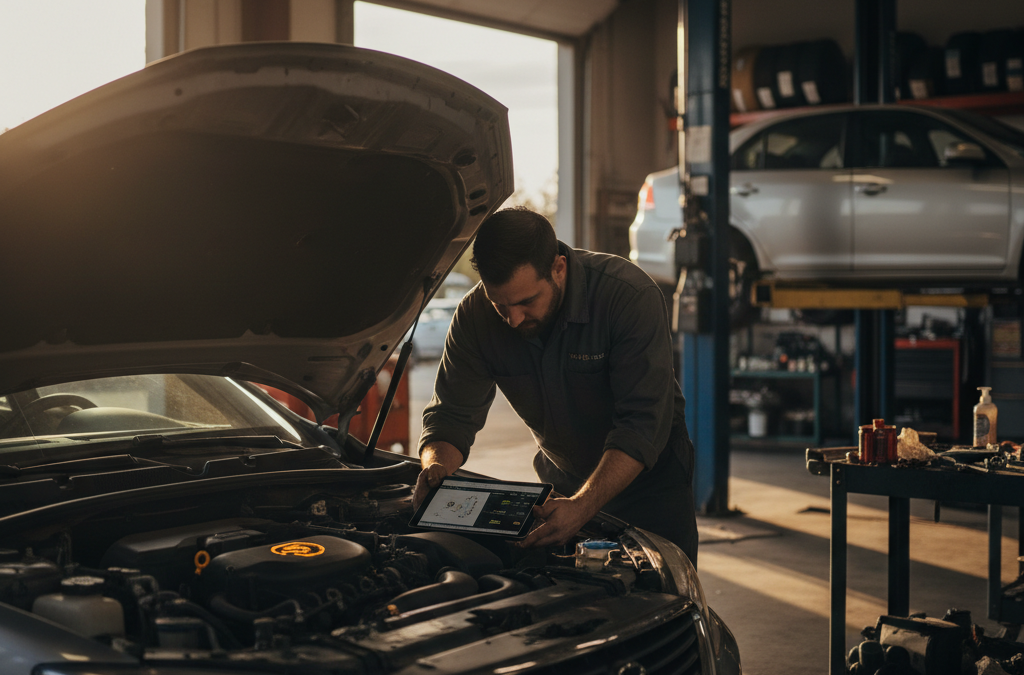
At On Site Auto Repair, we use professional-grade scan tools that go well beyond basic OBD-II readers. We look at live data — fuel trims, sensor readings, misfire counts — to figure out what’s actually causing the fault, not just what code got stored.
Brand-Specific Notes Worth Knowing
Certain vehicles have patterns we see regularly in the Santa Rosa area:
- Toyota and Lexus: Generally very reliable, but older 4-cylinder models sometimes show EVAP codes related to charcoal canister wear. Oxygen sensor codes are also common after 120,000 miles.
- Subaru: Head gasket issues on older 2.5L engines can sometimes trigger coolant temperature-related codes before the bigger problem becomes obvious. If you own an older Outback or Forester and the light just came on, get it checked sooner rather than later.
- Honda: VTC actuator noise and codes are common on 2008–2015 models — often misdiagnosed at first glance.
- Ford and Chevy trucks: Evap leak codes and throttle body issues are routine on higher-mileage trucks. Usually straightforward to fix.
- German vehicles (VW, Mercedes, BMW): These tend to have more complex fault codes that require manufacturer-level scan tools to interpret properly. Generic OBD-II readers often miss important detail.
We service all of these — and dozens of other makes and models — right here out of Santa Rosa. Our complete auto repair services cover diagnostics, engine repair, emissions system work, and everything downstream from a check engine light fault.
Frequently Asked Questions About Check Engine Lights in Santa Rosa
Can I drive my car with the check engine light on?
If the light is solid and the car is running normally, you can usually drive it to a shop within a day or two. If the light is flashing, or if the car is running rough, losing power, or overheating, stop driving and get it checked immediately.
Will the check engine light turn off on its own?
Sometimes, yes — especially for minor issues like a loose gas cap. But if the underlying problem is still present, the light will come back on within a few drive cycles. Don’t count on it staying off without a proper repair.
Does a free scan at an auto parts store tell me what’s wrong?
It tells you what code was stored, which is a starting point. But a code doesn’t tell you why — that requires a proper diagnostic inspection by a technician. Think of it like a doctor reading one symptom without running any tests.
How much does a check engine light diagnosis cost in Sonoma County?
Diagnostic fees vary by shop. At On Site Auto Repair, we believe in transparent pricing — contact us directly for current diagnostic pricing, and we’ll always explain what we found and what we recommend before any repair work begins.
Can wildfire smoke cause a check engine light?
It can contribute to sensor issues, particularly with mass airflow sensors and oxygen sensors, especially with repeated or prolonged exposure to ash and smoke. If your light came on around or after a fire event, mention it when you call — it helps narrow things down.
Get Your Check Engine Light Diagnosed in Santa Rosa
Whether you’re driving a newer Subaru out of Sebastopol, a high-mileage Honda from Healdsburg, or a work truck up and down 101 every day, don’t let that amber light sit ignored on your dashboard. Most check engine light repairs are straightforward when caught early. When they’re ignored, they get expensive.
At On Site Auto Repair, we’ve been diagnosing and fixing check engine light issues for Santa Rosa drivers since 2011. We use professional scan tools, explain what we find in plain language, and never recommend repairs you don’t actually need. Contact us today to schedule a diagnostic appointment or ask us a question — we’re always happy to talk it through before you commit to anything.