
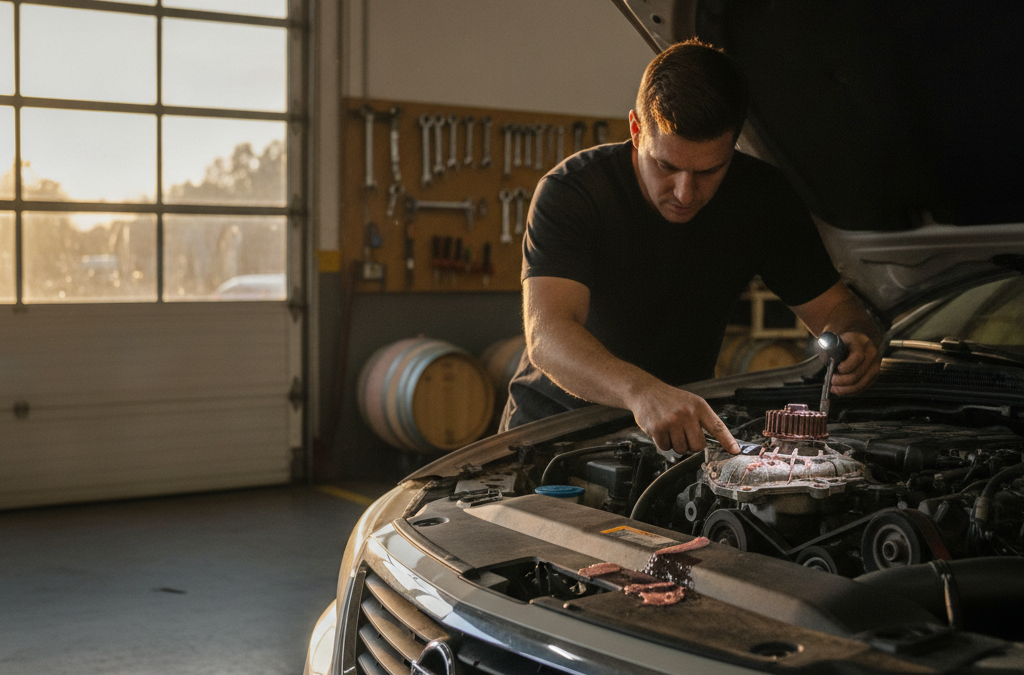
Why Is My Car’s Water Pump Failing in Sonoma? What Wine Country Drivers Need to Know About Water Pump Problems
If you’ve been driving around the Sonoma Valley — maybe heading up to a winery in Kenwood or catching Highway 12 through Glen Ellen — and you’ve noticed your temperature gauge nudging higher than it should, or you caught a whiff of something sweet and warm near your hood, your water pump may be starting to give out. It’s one of the most underappreciated parts in your cooling system, and when it fails, the consequences can go from minor inconvenience to serious engine damage fast. Here’s what you need to know.
What Does the Water Pump Actually Do?
Your water pump is the heart of your engine’s cooling system. Its job is simple but critical: it circulates coolant from the radiator through the engine block and back again, keeping everything at a safe operating temperature. When it’s working right, you never think about it. When it starts failing, your engine starts cooking — and that’s a problem you don’t want to ignore, especially during a hot Sonoma Valley summer.
Most water pumps are belt-driven (by either the timing belt or serpentine belt, depending on your vehicle), though some newer models use electric water pumps. Either way, they’re built to last — typically 60,000 to 100,000 miles — but they don’t last forever, and the warning signs can be easy to miss if you’re not looking for them.
Warning Signs Your Water Pump May Be Failing
Unlike a dead battery or a brake squeal, water pump problems tend to creep up gradually. Here’s what to watch and listen for:
- Engine overheating: If your temperature gauge is climbing toward the red, especially in stop-and-go traffic or on a long uphill stretch, the water pump may not be circulating coolant effectively.
- Coolant leak near the front of the engine: Water pumps have a weep hole designed to let a small amount of coolant escape as a warning before full seal failure. If you see a puddle of coolant — usually a bright green, orange, or pink liquid — under the front-center area of your car, this is worth checking right away.
- Whining or grinding noise near the engine: A worn bearing inside the water pump can produce a high-pitched whine or a low grinding sound, especially when the engine is cold. If it’s getting louder over time, the bearing is on its way out.
- Steam coming from under the hood: Steam is a late-stage warning sign. If you see it, pull over safely, turn off the engine, and don’t open the hood until things cool down. Continuing to drive risks warping your cylinder head or cracking the engine block — repairs that cost significantly more than a water pump replacement.
- Rust or corrosion around the water pump: Old or contaminated coolant can cause corrosion on the pump housing itself, accelerating wear and eventual failure.
Why Sonoma Valley Drivers Are Particularly at Risk
The water pump works harder when your engine runs hotter. And if you’re driving in and around Sonoma during peak summer and harvest season — July through October — your engine is dealing with sustained high ambient temperatures, slow tourist traffic on Sonoma Highway, and longer idle times. That’s a tough combination.
Residents in Boyes Hot Springs and the areas just south of Sonoma Plaza who make daily commutes on Highway 12 toward Santa Rosa know this stretch well. It’s not particularly hilly, but summer traffic can slow to a crawl, and that’s exactly when a marginal water pump will start showing its age. The same goes for drivers heading up into the hills toward Glen Ellen and Kenwood — those grades put extra thermal load on your engine, and a weak water pump won’t keep up.
Add in the fact that many vehicles in Sonoma County are carrying higher mileage — especially working vehicles, older imported cars, and the kind of reliable-but-aging Toyotas and Hondas that Sonoma Valley residents tend to hold onto for years — and you’ve got real reason to stay on top of cooling system health.
When Is Water Pump Replacement Usually Done?
This is where some practical knowledge can save you real money. On many vehicles — especially Hondas, Toyotas, Subarus, and other timing-belt-driven engines — the water pump is located behind the timing belt cover. That means if you’re having your timing belt replaced (typically every 60,000 to 105,000 miles depending on the vehicle), it makes strong sense to replace the water pump at the same time. The labor is largely shared, so you’re only paying for the parts, not a second round of teardown and reassembly.
This is an honest money-saving tip, not an upsell. If your shop is doing a timing belt job and doesn’t mention the water pump, it’s worth asking about it yourself. At On-Site Auto Repair, we always walk you through what makes sense for your specific vehicle and mileage — and we’re happy to explain what’s included and why before any work begins.
On serpentine-belt-driven water pumps (common on many Fords, Chevys, and newer imports), replacement intervals vary, but symptoms are usually your best guide. Our cooling system service includes a full inspection of the pump, belts, hoses, thermostat, and coolant condition — so you get a complete picture, not just a parts swap.
What Happens If You Ignore It?
A failing water pump left unaddressed will eventually stop circulating coolant altogether. At that point, engine overheating is guaranteed — and the damage that follows can be severe. Warped cylinder heads, blown head gaskets, and cracked engine blocks are all possible outcomes of running an engine too hot for too long. Repairs in that range can cost several times what a water pump replacement would have cost at the first sign of trouble.
Subaru owners in particular know that head gasket issues are no joke — the 2.5-liter engines in older Outbacks and Foresters are well known for this. Keeping the cooling system healthy is one of the most effective things you can do to extend the life of those engines.
What a Proper Water Pump Inspection Looks Like
When we look at a potential water pump issue, we’re not just checking the pump itself. A thorough cooling system inspection should include:
- Checking coolant level and condition (old, contaminated coolant accelerates pump wear)
- Inspecting the pump housing for seepage, rust, or cracks
- Testing the pump bearing for play or noise
- Inspecting drive belts for wear, cracks, or glazing
- Checking hoses for softness, hardness, or leaks
- Verifying the thermostat is opening and closing properly
- Pressure-testing the system for leaks not visible to the eye
If you’re dealing with unexplained overheating or coolant loss and can’t pinpoint the source, a proper diagnostic is always the right first step — not guesswork.
Frequently Asked Questions: Water Pump Problems in Sonoma County
How long does a water pump last?
Most water pumps are rated for 60,000 to 100,000 miles, but real-world lifespan depends on driving conditions, coolant quality, and vehicle make. Hot summers and stop-and-go traffic — both common in the Sonoma Valley — can shorten that window.
Can I drive with a leaking water pump?
A very minor weep from the pump’s weep hole might be caught early enough to schedule a repair without emergency. But if you’re losing significant coolant or the engine is running warm, do not drive the vehicle. Continuing to drive risks catastrophic engine damage that far outweighs the cost of a tow and repair.
How do I know if it’s the water pump or the thermostat causing overheating?
Both can cause overheating, but they behave a little differently. A stuck thermostat often causes the engine to heat up quickly and consistently. A failing water pump may cause overheating that comes and goes, especially under load. A proper cooling system inspection will usually identify which component is the culprit — and sometimes it’s both.
Should I replace the water pump when I do a coolant flush?
Not necessarily — but it’s a good time to inspect the pump closely. If the pump is approaching 80,000+ miles and showing any signs of wear, it may be worth replacing at the same time to avoid a second service appointment soon after.
Do you service all makes and models, including older vehicles?
Yes. We work on everything from high-mileage Toyotas and Hondas to domestic trucks, European vehicles, and newer hybrids. If it has a cooling system, we can service it.
Don’t Wait Until You’re Stranded on Sonoma Highway
A water pump replacement is a manageable, well-defined repair when caught early. Once you’re dealing with an overheated engine, the situation gets a lot more complicated and a lot more expensive. If you’re noticing any of the warning signs above — or if your vehicle is getting up there in mileage and hasn’t had a cooling system inspection recently — it’s worth getting it checked before the next summer heat wave hits the Sonoma Valley.
At On-Site Auto Repair, we’ve been helping Sonoma County drivers stay ahead of these kinds of problems since 2011. We’re honest about what needs to be done now versus what can wait, and we’ll always explain what we found and why before we touch anything. Reach out today to schedule a free estimate or a cooling system inspection — we’d rather help you avoid a breakdown than see you stuck on the side of the road.