
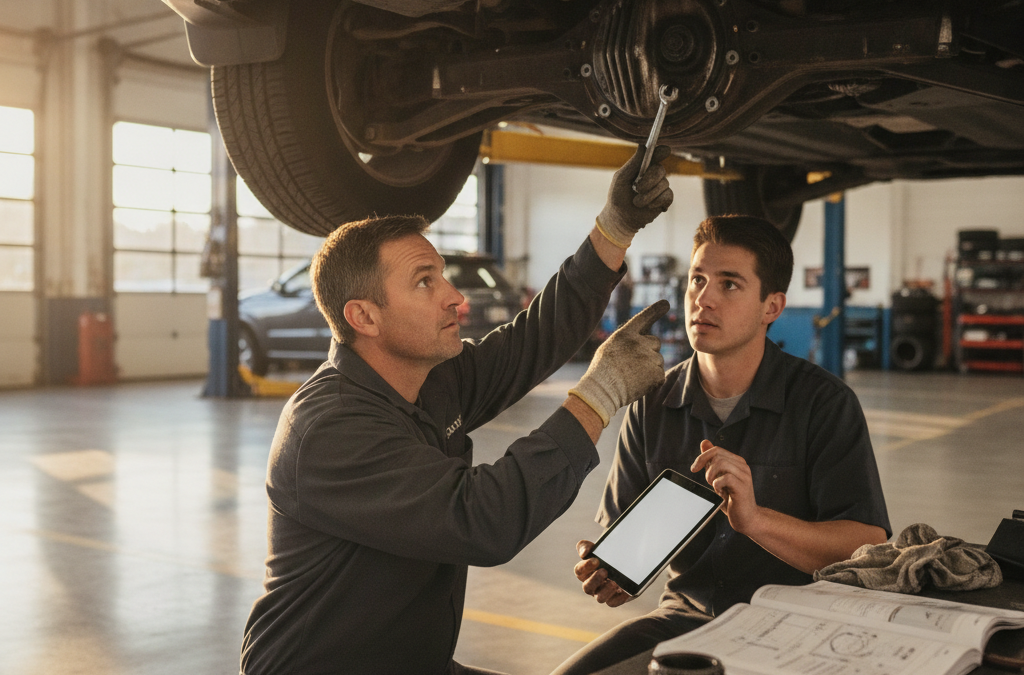
Why Is My Car’s Differential Making Noise in Petaluma? What Sonoma County Drivers Need to Know About Differential Problems
If you’re driving around Petaluma and you hear a strange whining, humming, or clunking noise coming from beneath your vehicle — especially when turning or accelerating — there’s a real chance your differential is trying to tell you something. The differential is one of those components most drivers never think about until it starts making noise or, worse, fails completely. And when it does fail, it can take out other expensive drivetrain parts along with it. The good news is that catching differential problems early usually means a much more affordable repair.
What Does a Differential Actually Do?
Your differential is part of your drivetrain — it’s the gear-housing assembly that allows your wheels to spin at different speeds when you turn a corner. Without it, your inside and outside wheels would be forced to rotate at the same speed, which would make turning almost impossible and would shred your tires fast. Most vehicles have at least one differential. Rear-wheel-drive trucks and SUVs have a rear differential. Front-wheel-drive cars have a front differential built into the transaxle. All-wheel-drive and four-wheel-drive vehicles — think Subaru Outbacks, Toyota Tacomas, and Ford F-150s, all common on Sonoma County roads — typically have both a front and rear differential, plus a center differential or transfer case.
Differentials rely on gear oil (also called differential fluid) to stay lubricated. When that fluid breaks down or leaks out, the gears inside can overheat, wear unevenly, and eventually seize up. That’s when the noises start — and things can escalate quickly if you don’t act.
Warning Signs Your Differential Is Failing
A differential in trouble rarely goes silent about it. Here’s what to listen and watch for:
- Whining or howling noise: This is the most common symptom. It usually changes pitch depending on your speed or whether you’re accelerating, decelerating, or holding steady. A steady whine that increases with speed is a red flag.
- Clunking when accelerating or changing gears: This can point to worn spider gears or ring-and-pinion gear damage inside the differential housing.
- Vibration through the floor or seat: Not always suspension-related — a worn differential can cause noticeable vibration, especially at highway speeds on Highway 101.
- Difficulty turning or tight handling: If your AWD or 4WD differential is binding, turns can feel stiff or jerky — especially low-speed turns in parking lots.
- Leaking gear oil: A puddle of thick, dark oil under the rear of your vehicle (or under the front axle on AWD cars) often means a differential seal has failed. Low fluid is a fast path to internal damage.
- Burning smell: Overheating differential fluid smells distinct — a sharp, gear-oil odor that’s hard to miss.
Why Petaluma and Sonoma County Drivers See This More Than They’d Expect
Differential problems aren’t random — certain driving conditions accelerate wear. If you’re doing regular Highway 101 commutes from Petaluma to Santa Rosa or down toward Novato, your drivetrain is working hard at sustained highway speeds day after day. That steady load is rough on differential gears and seals over time.
If you live near Penngrove or spend time on the backroads between Sebastopol and the Russian River Valley wine country, gravel roads, off-camber turns, and uneven surfaces put extra stress on differentials — especially on trucks and SUVs used for both daily commuting and weekend wine country exploring. Add in the fact that Sonoma County’s cool, wet winters can wash away gear oil from aging seals, and you’ve got a recipe for differential wear that catches a lot of drivers off guard.
AWD vehicles like Subarus are particularly popular in this area, and they’re also particularly sensitive to differential and transfer case issues when fluid isn’t changed on schedule. Subaru owners in particular should pay close attention to drivetrain fluid intervals.
Differential Fluid: The Most Overlooked Maintenance Item
Here’s the honest truth that most drivers don’t hear: differential fluid is one of the most frequently skipped maintenance items, because it’s not as visible or discussed as oil changes or brake pads. Most manufacturers recommend changing differential fluid every 30,000 to 60,000 miles under normal conditions — and more often under severe conditions (towing, off-road use, stop-and-go driving, or extreme heat). Some limited-slip differentials require a special friction modifier additive in the gear oil, and using the wrong fluid can actually cause the differential to chatter or vibrate on turns.
If you’ve never had your differential fluid changed — or you don’t know when it was last done — it’s worth having it inspected. Old, burnt gear oil that’s been in there too long will eventually cost you a full differential rebuild or replacement, which is significantly more expensive than a fluid service.
What a Differential Repair Actually Involves
The scope of repair depends on how far the damage has progressed. In the best-case scenario, you need a fluid change and a new seal — straightforward and affordable. If gears are worn or damaged, a rebuild or replacement of the differential unit may be needed. A complete rear differential replacement on a truck can range from a few hundred to over a thousand dollars depending on the vehicle and whether you’re using OEM or quality aftermarket parts. That’s a wide range, which is exactly why an honest diagnosis matters before any work begins.
At On-Site Auto Repair in Santa Rosa, we don’t guess — we inspect the differential, check the fluid condition and level, look for seal leaks, listen to the noise pattern, and give you a straight answer about what’s happening and what it’ll take to fix it. No pressure, no upselling, no vague estimates. Our full-service approach covers drivetrain repairs for domestic and foreign vehicles alike — from Ford F-250s in Windsor to Honda CR-Vs in Rohnert Park.
A Gap Most Local Shops Don’t Cover: Brand-Specific Differential Quirks
Most local shop websites mention differentials only in passing, if at all. But if you drive a specific make, there are real differences worth knowing:
- Subaru AWD systems: Subaru’s symmetrical AWD relies on the center differential and viscous coupling — if tires are mismatched in diameter (even slightly), it can stress the center diff significantly. Always replace all four tires at once on Subarus, and check AWD fluid regularly.
- Toyota Tacoma and 4Runner: The rear differential on these trucks is known to last a long time with proper fluid changes, but the rear diff pinion seal is a common slow leak point. Catch it early and it’s a minor repair.
- Ford F-150 and trucks with limited-slip differentials: These require gear oil with the correct friction modifier. Using standard gear oil without it causes chatter and premature clutch pack wear.
- Jeep Wrangler and Grand Cherokee: These see significant off-road use, and differential vent tubes can get clogged or submerged, allowing water intrusion into the diff. This is a serious issue that leads to fast internal corrosion.
Frequently Asked Questions About Differential Problems in Sonoma County
How do I know if the noise is my differential or something else?
Differential noise typically changes with vehicle speed, not engine RPM. If the whining pitch rises and falls with your speedometer rather than your tachometer, the differential is a strong suspect. Wheel bearings can sound similar — a proper inspection by a mechanic will nail down the source.
Can I drive with a noisy differential?
It depends on how bad the noise is and how quickly it developed. A mild whine that’s been stable for a while is less urgent than a sudden grinding or clunking that appeared overnight. Either way, don’t ignore it for long — a failing differential can leave you stranded, and on a busy stretch of Highway 101 near Petaluma, that’s not where you want to be.
How often should differential fluid be changed?
Most manufacturers recommend every 30,000 to 60,000 miles, but check your owner’s manual — especially if you tow, carry heavy loads, or do any off-road driving. If you’re unsure when it was last serviced, have it inspected. Fresh fluid is cheap insurance against a costly rebuild.
Does my front-wheel-drive car have a differential?
Yes — it’s built into the transaxle. Front-wheel-drive vehicles don’t have a separate rear differential, but the front differential is integrated into the transmission housing and uses the same fluid. It still needs to be serviced on schedule.
Is differential repair something On-Site Auto Repair handles?
Yes. We service differentials on all makes and models — including AWD, 4WD, and front-wheel-drive vehicles. We’ll inspect the unit, check fluids, identify the source of any noise or leak, and give you an honest repair estimate before any work begins.
Don’t Wait Until the Noise Gets Worse
A differential that’s whining today can be grinding next month — and the difference in repair cost is significant. If you’re hearing something unusual from beneath your vehicle anywhere in Sonoma County, from Petaluma to Santa Rosa to Sebastopol, it’s worth getting it looked at before a manageable repair turns into a full replacement.
On-Site Auto Repair has been serving Sonoma County drivers since 2011. We’re straightforward about what we find, honest about what needs to be done, and we treat your vehicle the same way we’d treat our own. Contact us today to schedule an inspection or get a free estimate — we’ll tell you exactly what’s going on and what it’ll take to fix it right.