Why Is My Car’s Power Window or Power Lock Failing in Healdsburg? What Sonoma County Drivers Need to Know About Electrical Accessory Problems
If your power window has stopped moving — or only works when it feels like it — or your door lock clicks but doesn’t actually lock, you’re dealing with one of the most common and most overlooked electrical issues in modern vehicles. Drivers in Healdsburg and throughout Sonoma County deal with this more often than you might expect, and while it doesn’t feel as urgent as a check engine light or grinding brakes, a failed window or lock can leave you exposed to weather, theft risk, or an inability to exit your vehicle in an emergency. Here’s what’s actually going on, and what to do about it.
What Makes Power Windows and Locks Fail?
Your power windows and door locks are part of your vehicle’s body electrical system — a network of motors, switches, wiring, fuses, and (in newer vehicles) body control modules that all have to work together. When one piece of that chain breaks down, the whole function stops. The most common culprits break down like this:
- Window motor failure: The small electric motor inside your door panel wears out over time, especially in vehicles with high mileage. You might hear a faint grinding or humming sound when you press the switch, or nothing at all.
- Window regulator failure: The regulator is the mechanical arm or cable system that actually moves the glass up and down. When it breaks, the window may drop suddenly, tilt at an angle, or refuse to move. This is one of the most common repairs we see on Honda Civics, Toyota Camrys, and older Ford trucks.
- Door lock actuator failure: The actuator is a small motor inside the door that physically moves the locking mechanism. When it wears out, you’ll often hear a clicking or buzzing when you hit the lock button — but the lock doesn’t actually engage. Sometimes only one door is affected; other times they start failing one by one.
- Blown fuse or relay: A single fuse can take out power to an entire set of windows or all the locks at once. This is the first thing we check — it’s a quick fix when that’s all it is.
- Wiring or switch problems: Wiring runs through your door hinge area and flexes thousands of times over the life of the vehicle. Eventually, that flex causes breaks in the wire insulation or the wires themselves. Switch contacts also wear out, especially on the driver’s door master switch, which gets used far more than any other.
Why This Is More Common in Wine Country Vehicles
Healdsburg sits at the northern end of Wine Country, and the roads out toward Geyserville, Cloverdale, and the Alexander Valley are beautiful — but they’re also remote. If your window motor fails on a warm afternoon while you’re parked at a tasting room with your windows down, you’ve got a problem. You can’t leave your car unattended with a window stuck open, and the drive home on Highway 101 without a working window is loud and can let in dust and road grime.
Beyond that, Sonoma County’s climate plays a real role in how quickly these systems degrade. Hot, dry summers cause rubber seals and plastic components inside the door panels to become brittle. The temperature swings between cool mornings and hot afternoons stress wiring and connectors. And if your vehicle lived through the smoky wildfire seasons of recent years, particulate exposure can work its way into door panel gaps and accelerate wear on motors and contacts.
Vehicles with higher mileage — which is common in working-class communities throughout the county, from Windsor south to Santa Rosa — tend to see regulator and actuator failures starting around 80,000 to 120,000 miles. But we’ve also seen brand-new-to-you used vehicles where a previous owner’s temporary fix with electrical tape has finally given out.
Warning Signs You Shouldn’t Ignore
Power window and lock problems usually give you a heads-up before they fail completely. Watch for:
- A window that moves slowly or hesitates before going up or down
- A grinding, popping, or squealing sound when operating the window
- A window that only works from one switch (the door switch) but not the master switch, or vice versa
- Door locks that make noise but don’t fully engage
- Locks that work from the key fob but not the interior button, or the opposite
- A window that falls into the door when you open it — this usually means the regulator clip has broken
Don’t wait on these. A window motor that’s struggling draws more current than normal and can blow a fuse, sometimes taking other accessories with it. Getting it diagnosed early is almost always cheaper than dealing with a cascade of related problems.
What a Proper Diagnosis Looks Like — and Why It Matters
Here’s where a lot of drivers get burned: they go somewhere that does a quick visual check, gets told it’s the motor, pays for a motor replacement, and then finds out it was actually the regulator or a corroded connector. A thorough diagnosis means checking the switch, the wiring at the door hinge, the fuse and relay, and the motor and regulator together before any parts are ordered.
At On-Site Auto Repair, we’ve been doing this kind of hands-on diagnostic work since 2011. We don’t guess and we don’t upsell. If the problem is a $15 fuse, that’s what we tell you. If the regulator has snapped and needs to be replaced along with the motor — which is common because the two are often sold as an assembly — we’ll explain why and show you what we found. Our diagnostic process is the same whether it’s a window motor or a transmission: we find the actual cause before recommending a fix.
What This Repair Typically Involves
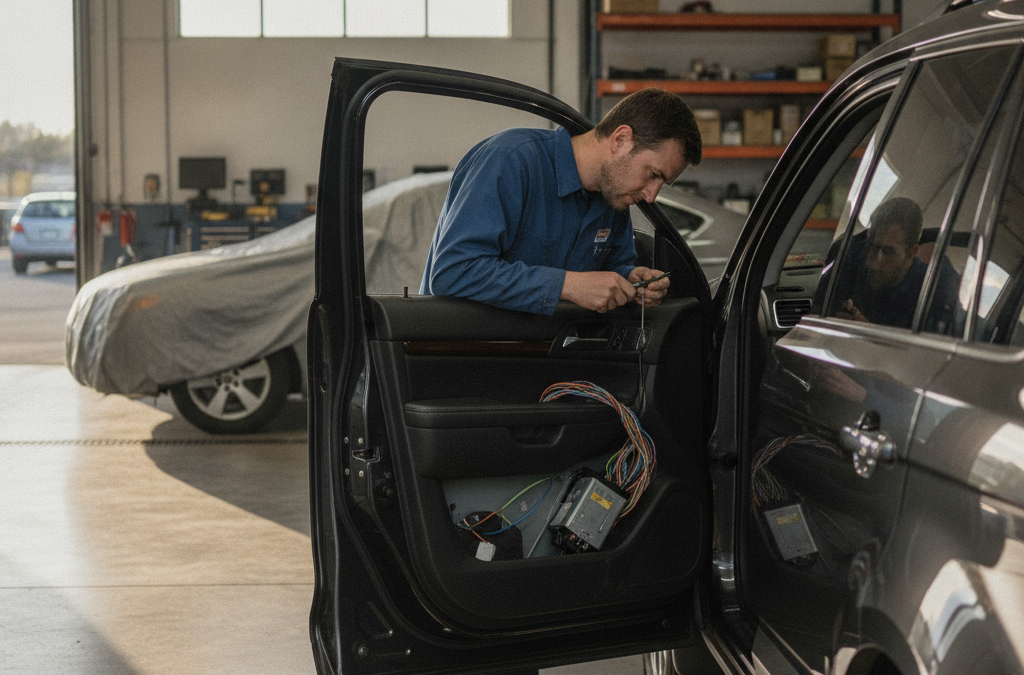
Power window and lock repairs usually involve removing the door panel, which takes time and care to do without breaking the plastic clips that hold it in place. On older vehicles, those clips are brittle and can snap if you’re not careful. The repair itself varies:
- Window motor only: If the regulator is intact and the motor has failed, replacing just the motor is possible on some vehicles — but on many modern cars and trucks, the motor and regulator come as an integrated unit and have to be replaced together.
- Window regulator and motor assembly: This is the most common power window repair. Depending on the vehicle and which door it is, this is typically a straightforward job once the panel is off.
- Door lock actuator: Similar process — door panel comes off, old actuator unclips, new one goes in. Sometimes the rods or linkages connected to the actuator need adjustment too.
- Wiring repair: This is the most time-intensive repair because finding exactly where the break occurred in the door flex area requires patience and the right tools. It’s not glamorous work, but it’s far cheaper than replacing components that are actually fine.
We work on all makes and models — from Toyota Tacomas and Honda Pilots to Ford F-150s, Subaru Outbacks, Chevy Silverados, and everything in between. Older vehicles like Pontiacs, Saturns, and Mercurys that are still running strong in Sonoma County often need creative sourcing for door parts, and that’s something we handle regularly.
What Competitors Aren’t Telling You About Electrical Accessory Repairs
Scanning the websites of local shops around Sonoma County, you’ll find plenty of pages about brakes, oil changes, and check engine lights — but almost nothing about body electrical systems like power windows and locks. This matters because drivers often don’t know where to take this kind of problem. They assume it’s a dealership job, or they try to ignore it.
It’s not a dealership job. Any qualified independent shop with the right diagnostic tools and experience with body electrical systems can handle it — often for significantly less than a dealer would charge. The key is finding someone who will actually diagnose the problem rather than throw parts at it. Our complete auto repair services cover electrical accessories along with everything else your vehicle needs, under one roof.
Frequently Asked Questions
My window works sometimes but not others — is it the switch or the motor?
Intermittent problems like this are most often caused by a worn switch or a failing connection in the wiring harness. The motor itself tends to fail more decisively — either it works or it doesn’t. But a proper diagnosis is the only way to know for sure, because a motor that’s on its way out can also be intermittent in the early stages.
Can I drive around with a window stuck open?
You can, but you shouldn’t for long. An open window exposes your interior to rain, dust, and theft — and in Sonoma County’s wildfire season, ash and smoke can get inside and damage upholstery and electronics. Use painter’s tape and a plastic bag as a temporary seal if you need to drive a short distance, but get it fixed as soon as you can.
My door locks work from the fob but not the button inside — what does that mean?
This is a classic symptom of a failed interior door lock switch. The fob signal bypasses the switch entirely and goes straight to the body control module, so if the fob works but the button doesn’t, the switch is almost always the problem. It’s usually an inexpensive fix.
Do I need to go to a dealer for this kind of repair on a newer vehicle?
Not in most cases. Unless a repair requires reprogramming a body control module with proprietary dealer software — which is rare for basic window and lock repairs — an independent shop with proper scan tools can handle it. Drivers in Healdsburg, Cloverdale, and Windsor routinely save money by coming to an independent shop rather than making the long drive to a franchise dealership.
How long does a power window or lock repair usually take?
Most single-door window or lock repairs are completed in a half-day or less. If we’re dealing with a wiring diagnosis that requires more tracing, it might take longer, but we’ll let you know upfront before we start work so you’re never surprised by the timeline or the bill.
Ready to Get Your Windows and Locks Working Again?
Don’t put up with a window that only goes down when it feels like it or a door lock you can’t trust. Whether you’re in Healdsburg, Windsor, or anywhere else in Sonoma County, On-Site Auto Repair is here to give you an honest diagnosis and a straightforward fix. We’ve been treating our customers’ vehicles like our own since 2011, and we’re not going to change that approach now.
Contact us today to schedule a free estimate and tell us what’s going on. We’ll take it from there.