Why Is My Car’s Cabin Air Filter Clogged in Windsor? What Sonoma County Drivers Need to Know About Air Quality Inside Your Vehicle
If your car’s AC or heat feels weaker than it used to, or there’s a musty smell every time you flip on the fan, your cabin air filter is probably the culprit — and if you live in Windsor or anywhere in Sonoma County, chances are it’s working harder than the manufacturer ever planned for. Wildfire smoke, orchard dust, coastal fog, and pollen from the surrounding wine country countryside put a serious load on that one small filter sitting behind your glove box. Here’s what you need to know about it, including why most drivers replace it way too late.
What Does a Cabin Air Filter Actually Do?
Your cabin air filter is a pleated filter — usually made of paper, activated charcoal, or a multi-layer synthetic material — that cleans the air flowing through your car’s heating and air conditioning system before it reaches the passenger compartment. It catches dust, pollen, mold spores, exhaust particles, and in our region, wildfire ash and smoke particulates.
Unlike your engine air filter, which protects the motor, the cabin filter protects you and your passengers. It’s the difference between breathing relatively clean air on your commute down Highway 101 and breathing whatever the road kicked up on the way from Cloverdale to Rohnert Park — including the stuff you can’t see.
Most manufacturers recommend replacing the cabin air filter every 15,000 to 25,000 miles, or once a year. But here in Sonoma County, that interval often needs to come sooner.
Why Sonoma County Is Especially Hard on Cabin Air Filters
This is the part that most generic maintenance articles skip right over — and honestly, it’s the most important part if you’re a local driver.
Northern California has a combination of conditions that clog cabin filters faster than almost anywhere else in the country:
- Wildfire smoke and ash. If your vehicle was in the area during any of the recent major fires — or even if you drove through smoke-heavy air on the 101 corridor — your cabin filter absorbed an enormous amount of fine particulate matter. After a bad fire season, it’s worth checking the filter even if you just replaced it. Smoke particles are tiny and they saturate filters fast.
- Vineyard and orchard dust. Drivers in Windsor, Healdsburg, and out toward Larkfield-Wikiup deal with significant agricultural dust during harvest season, particularly late summer and fall. That dust clogs filters quickly and can carry pesticide residue you really don’t want circulating through your car’s interior.
- Coastal moisture and fog. Cool, damp air — especially when it mixes with dust and pollen — creates conditions where mold and mildew can develop inside a clogged or partially clogged filter. That’s usually what causes the musty smell drivers notice when they first turn on the AC in the morning.
- Pollen season. Sonoma County’s mild climate and diverse plant life means pollen season is long and heavy. If you’re sneezing in your car but not outside, a plugged cabin filter that’s no longer catching airborne allergens is a likely cause.
Signs Your Cabin Air Filter Needs to Be Replaced
You don’t need to pull the filter yourself to know something’s off. Here’s what to watch — and smell — for:
- Reduced airflow from your vents. If the fan sounds like it’s working hard but little air is actually coming out, a blocked filter is often the first thing to check before assuming your blower motor is failing.
- Musty or stale odor when you run the AC or heat. That smell is usually mold or trapped organic matter in a saturated filter. Running the AC without fixing the filter won’t make it go away.
- More dust than usual on your dashboard. A clogged filter that’s starting to break down can actually pass particles through, especially around the edges where the seal has degraded.
- Allergy symptoms that flare up in the car. If your eyes and sinuses feel worse inside the vehicle than outside, your filter may no longer be doing its job.
- Foggy or hazy windows that are slow to clear. Your defroster relies on airflow. A restricted filter means less airflow, which means your defroster struggles — a real safety issue on cool Sonoma County mornings.
The Wildfire Smoke Problem: When to Replace Early
This is something we hear about constantly from drivers coming in from Windsor, Healdsburg, and up toward Cloverdale. After a significant smoke event, a cabin filter that looked fine visually can be functionally saturated with fine particulate matter — the PM2.5 particles that are small enough to penetrate deep into your lungs.
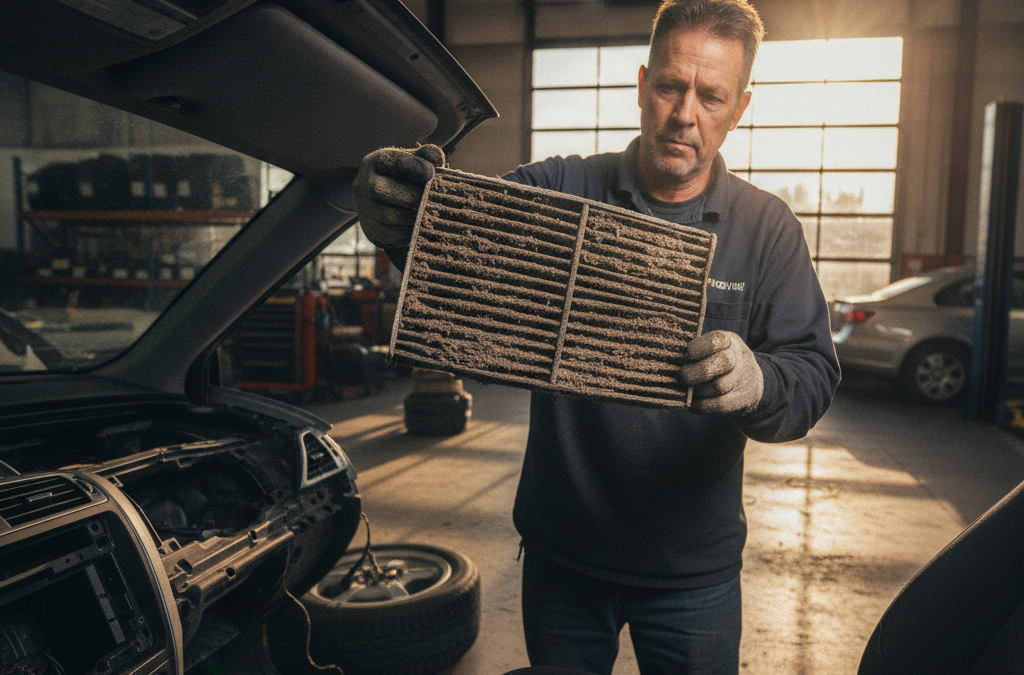
If your area experienced heavy smoke this year and you haven’t checked your cabin filter since, that’s reason enough to have it looked at regardless of mileage. Some filters look gray-brown and dusty; others look deceptively okay on the outside but are fully loaded inside the pleats where you can’t see.
Activated charcoal cabin filters do a better job of trapping odors and fine smoke particles than standard paper filters — and they’re worth considering as an upgrade if you’re in a smoke-prone part of the county. When we swap filters out at On-Site Auto Repair, we can help you choose the right filter type for your driving environment, not just whatever’s cheapest on the shelf.
What About the AC and Heating System?
A severely restricted cabin filter doesn’t just affect air quality — it puts real strain on your blower motor. The motor has to work against that resistance every time you run the fan. Over time, that can accelerate blower motor wear and lead to a more expensive repair down the road. Think of it like trying to breathe through a towel: eventually something gives.
If you’ve been running your AC or heat with a clogged filter for a while, it’s worth having your HVAC system inspected at the same time you replace the filter — just to make sure the blower is in good shape and there’s no mold buildup inside the evaporator housing itself.
Is This a DIY Job or a Shop Job?
On many vehicles — Toyotas, Hondas, Subarus, and most domestic trucks — the cabin air filter is accessible through the glove box and can be replaced in about 15 minutes with no tools. The filter itself typically costs between $15 and $40 depending on type and brand. If you’re handy and comfortable looking up your specific vehicle, it’s a reasonable DIY task.
That said, a few things make it worth having a shop handle it:
- Some vehicles — particularly German makes like Volkswagen and Mercedes — have awkward or deeply buried filter housings that take longer and are easy to reassemble incorrectly.
- If the housing has mold buildup, you’ll want it cleaned properly, not just swapped out.
- Having a technician check it means they’ll also catch anything else that looks off — blower motor condition, evaporator smell, duct sealing — rather than just swapping a part and walking away.
How Often Should Sonoma County Drivers Replace Theirs?
Our honest recommendation for most Sonoma County drivers:
- Every 12,000 to 15,000 miles if you drive regularly through dusty or agricultural areas — especially out toward Windsor, Healdsburg, or rural Sonoma Valley roads.
- After any significant wildfire smoke event, regardless of mileage.
- At least once a year if you drive primarily in town but have experienced a smoky summer or fall.
- Whenever you notice symptoms — airflow reduction, odors, or allergy flare-ups in the car — even if you just replaced it.
This is one of the cheapest maintenance items on any vehicle. Skipping it doesn’t save money in the long run — it just means you’re breathing dirtier air and potentially running your blower motor into the ground.
Frequently Asked Questions
How much does cabin air filter replacement cost in Sonoma County?
The filter itself runs $15 to $45 at most parts stores, with labor adding a small amount at a shop depending on how accessible the housing is on your specific vehicle. It’s one of the more affordable maintenance items you can do, and it makes a real difference in comfort and air quality.
Can a clogged cabin air filter damage my car?
It can accelerate wear on your blower motor over time and reduce the effectiveness of your AC and defroster. It won’t cause a breakdown on its own, but ignoring it long enough creates conditions for other repairs — and it definitely affects your comfort and health in the meantime.
Should I replace my cabin air filter after wildfire season in Sonoma County?
Yes. After heavy smoke exposure, even a relatively new filter can be loaded with fine particulates that you can’t see from the outside. It’s inexpensive to replace and the peace of mind is worth it, especially if you have kids or anyone with respiratory sensitivities riding in the car.
Does the cabin air filter affect the smell inside my car?
Absolutely. A musty or stale smell when you turn on the fan is one of the most common signs of a filter that’s overdue for replacement — especially if it’s been exposed to moisture or coastal fog. An activated charcoal filter can help reduce odors from outside the car as well.
Where can I get my cabin air filter checked in Windsor or nearby?
We serve drivers throughout Windsor, Healdsburg, Larkfield-Wikiup, Rohnert Park, and all of Sonoma County. You’re welcome to bring your vehicle in for a quick filter inspection as part of any service visit, or we can check it on its own if that’s your only concern.
Get Your Cabin Air Filter Checked at On-Site Auto Repair
If you can’t remember the last time your cabin air filter was replaced — or if your AC airflow feels weak, your car smells musty, or you just went through another smoky Sonoma County fire season — it’s time to have it looked at. At On-Site Auto Repair, we’re straightforward about what needs to be done and what can wait. We serve drivers from Windsor and Healdsburg down through Santa Rosa, Rohnert Park, and beyond. Give us a call at (707) 326-8655 or reach out online to schedule an inspection — no pressure, no upselling, just honest answers about what’s going on with your vehicle.