Why Is My Car’s Fuel Pump Failing in Windsor? What Sonoma County Drivers Need to Know About Fuel Delivery Problems
If your car has been acting up near Windsor — maybe it sputtered on Old Redwood Highway, hesitated pulling onto 101 toward Healdsburg, or just wouldn’t start in your driveway — a failing fuel pump might be exactly what’s going on. It’s one of the more misunderstood problems in auto repair, partly because the symptoms sneak up on you and can mimic a dozen other issues. The good news is that once it’s properly diagnosed, fuel pump replacement is a straightforward repair. The key is not waiting until you’re stranded on the side of the road.
What Does a Fuel Pump Actually Do?
Your fuel pump sits inside your gas tank (on most modern vehicles) and does exactly what the name says — it pumps fuel from the tank to the engine at the right pressure. Your engine needs a consistent, precise amount of fuel delivered at the right time. When the pump starts to wear out, it can’t maintain that pressure, and the engine starts to suffer for it.
Most fuel pumps are electric and are designed to last anywhere from 100,000 to 150,000 miles, though a lot of factors — how often you run the tank near empty, fuel quality, and just plain age — can shorten that lifespan considerably. Up here in Sonoma County, where plenty of drivers are commuting long stretches on Highway 101 or putting serious miles on older vehicles, fuel pump wear is more common than people expect.
Warning Signs Your Fuel Pump Is Starting to Fail
The tricky thing about fuel pump problems is that they tend to be intermittent at first. Your car runs fine for a week, then stutters on Thursday morning. Here’s what to watch for:
- Engine sputtering or surging at highway speeds — If you’re cruising up 101 toward Cloverdale and the engine starts to sputter or jerk without explanation, low fuel pressure is a likely cause.
- Hard starts or long cranking before the engine fires — The fuel pump primes the system when you turn the key. A weak pump means the engine takes longer to get fuel and longer to start.
- Loss of power under load — Climbing a grade, hauling a load, or merging onto the freeway puts extra demand on the engine. A struggling fuel pump can’t keep up, and you’ll notice the engine feeling sluggish or flat.
- Stalling, especially when the engine is warm — A pump that’s failing due to heat may work fine when cold but give out after the car warms up. This is a classic symptom and one that often catches drivers off guard.
- Whining noise from the rear of the car — The fuel tank is back there, and a worn pump motor often produces a high-pitched whine or hum. If you hear something new coming from behind you, that’s worth paying attention to.
- Check engine light with fuel pressure codes — Codes like P0087 (fuel system too lean / low pressure) or P0230 are common when the pump is struggling. These won’t always show up right away, but they often appear as the problem worsens.
Why Running on a Low Tank Hurts Your Fuel Pump
This is something a lot of drivers don’t know: your fuel pump uses the gasoline around it as a coolant. When you consistently run your tank down to the last quarter — or lower — you’re essentially running the pump hotter than it’s designed to. Over time, that heat degrades the pump motor faster.
It’s an especially easy habit to fall into on long commutes. If you’re driving from Windsor down to Rohnert Park or Santa Rosa every day, it can be tempting to stretch a tank. Totally understandable — but try to keep it above a quarter tank whenever you can. It’s one of the simplest things you can do to extend fuel pump life.
How Fuel Pump Problems Get Diagnosed — And Why “Free Scanners” Often Miss Them
Here’s a gap that’s worth addressing directly: a lot of drivers head to a parts store, get a free OBD-II scan, see no codes, and assume the fuel pump is fine. That’s not always a reliable conclusion. A failing pump may not throw a code until it’s pretty far gone, and some of the classic symptoms — intermittent sputtering, hard starts, power loss — don’t always trigger a stored fault code.
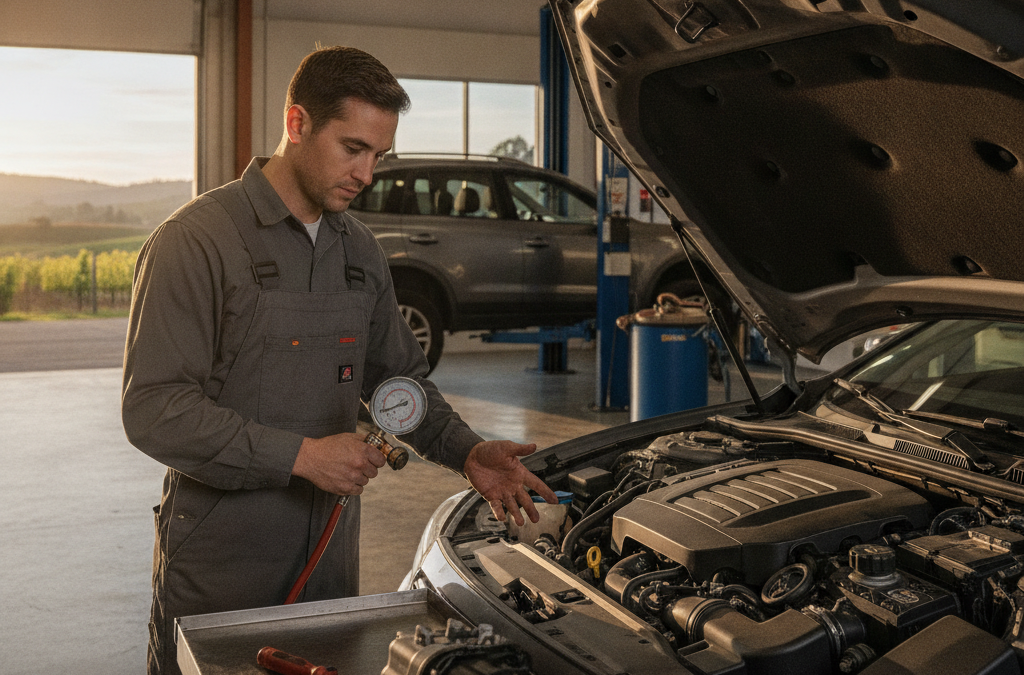
Proper fuel system diagnosis involves checking actual fuel pressure with a gauge, not just scanning for codes. A technician connects a fuel pressure gauge to the test port on your fuel rail and watches what the pressure does at idle, under load, and after shutdown. A pump that’s weak will show low or fluctuating pressure even when no code is present. That’s the kind of hands-on diagnostic work that tells the real story.
At On Site Auto Repair, we do that work before recommending anything. We’re not going to suggest a fuel pump replacement based on a guess — we want to verify it with actual pressure data. That’s just how honest diagnosis works. You can learn more about how we approach auto diagnostics and inspection on our services page.
What Fuel Pump Replacement Actually Involves
On most modern vehicles, the fuel pump is accessed through the top of the fuel tank or by dropping the tank from underneath the car. It’s typically replaced as a module — pump, sending unit (which controls your fuel gauge), and strainer all together. The job requires draining or lowering the fuel tank, which is why it takes a few hours of shop time.
One thing worth knowing: if your fuel pump has failed, it’s also a good time to replace the fuel filter if it’s a separate serviceable part on your vehicle. A clogged filter can actually cause premature pump failure by making the pump work harder than it should. We’ll always let you know if that applies to your specific vehicle so you’re not back in six months with the same issue.
Makes and Models We See Most Often with Fuel Pump Issues
Fuel pump failures can happen on any vehicle, but some show up in our bays more than others. Older Ford trucks and SUVs, high-mileage GM vehicles, and some Japanese brands with age and deferred maintenance are common ones. That said, we’ve replaced fuel pumps on everything from Toyotas and Hondas to Subarus, Nissans, Jeeps, and older Dodge trucks. If you’re not sure whether your vehicle’s symptoms point to a fuel pump or something else, just give us a call and describe what you’re experiencing — we can help you figure out if it’s worth bringing in.
For Windsor and northern Sonoma County drivers, we also want to flag something practical: if your vehicle is showing intermittent symptoms and you’re regularly driving rural roads toward Healdsburg wine country or up toward Cloverdale, don’t put off getting it checked. Those roads don’t always have great cell service, and getting stranded between vineyards in August heat is no fun for anyone.
Can You Drive on a Failing Fuel Pump?
For a short time, maybe — but it’s not a good idea to push it. The risk is stalling unexpectedly in traffic or on the freeway, which is a safety issue. If the pump fails completely, the car won’t start at all, and you’re looking at a tow. The better move is to get it checked when the symptoms are still intermittent, before it leaves you stranded. Repair costs are generally more predictable when you’re dealing with a worn pump rather than a complete failure that may have caused other issues downstream.
Our preventive maintenance services include fuel system inspections, which can catch problems like this before they turn into an emergency.
Frequently Asked Questions About Fuel Pump Problems in Sonoma County
How do I know if it’s the fuel pump or something else causing my car to stall?
Stalling can come from a lot of places — a bad crankshaft position sensor, ignition issues, a failing throttle body, or fuel delivery problems. The best way to know is a proper diagnostic that includes fuel pressure testing. Don’t let anyone guess without actually testing the system.
My car starts fine when it’s cold but stalls when it warms up — is that a fuel pump?
That’s a classic symptom of a heat-sensitive fuel pump motor. As the pump warms up, the internal windings expand and the motor struggles. It doesn’t always mean immediate replacement — but it needs to be tested soon, because that pattern tends to get worse quickly.
How long does a fuel pump replacement take?
On most vehicles, plan on two to four hours of shop time depending on the make, model, and tank access. Some trucks and SUVs with large tanks take longer. We’ll give you a realistic timeline before we start.
Does running out of gas damage the fuel pump?
It can, especially if it happens repeatedly. Running the pump dry — even briefly — exposes it to heat without the cooling effect of fuel. One incident probably won’t kill a healthy pump, but it’s a contributing factor over time.
Do you service fuel pumps on both foreign and domestic vehicles in Sonoma County?
Yes — we work on all makes and models, including Toyota, Honda, Ford, Chevy, Subaru, Nissan, Jeep, and many others. Whether you’re driving a newer vehicle or an older workhorse with 180,000 miles on it, we can help.
Don’t Get Stranded — Get It Checked First
If you’re noticing any of the symptoms above — sputtering, hard starts, stalling, power loss, or that whining sound from the back of the car — don’t wait for the problem to get worse. A proper diagnosis will tell you exactly what’s going on, and we’ll give you a straight answer about what it needs and what it’ll cost before any work is done.
On Site Auto Repair has been serving Windsor, Santa Rosa, Healdsburg, Rohnert Park, and drivers throughout Sonoma County since 2011. We treat your vehicle like our own — honest estimates, no pressure, no unnecessary upsells. Reach out today to schedule your diagnosis or get a free estimate. We’re here to help you stay on the road safely.