Why Does My Car Smell Like Something’s Burning in Petaluma? What Those Weird Odors Are Actually Telling You
If you’ve caught a burning smell coming from your car while driving through Petaluma — maybe on your way down Highway 101, running errands around town, or heading home after a long commute from the Bay Area — don’t brush it off and hope it goes away. Burning smells from a vehicle are almost always a warning sign that something is going wrong. The tricky part is that different smells mean very different things, and knowing the difference can be the gap between a quick fix and an expensive repair.
Here’s a straightforward breakdown of the most common burning odors drivers report, what’s actually causing them, and what you should do about each one.
Burning Oil Smell: One of the Most Common Complaints
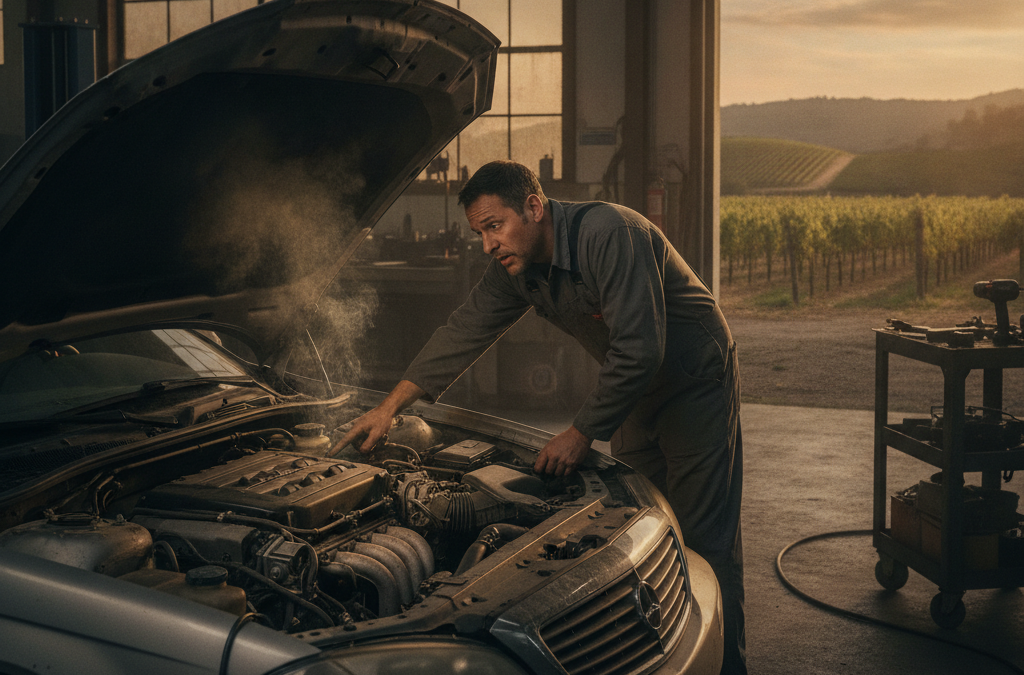
A sharp, acrid smell — almost like something hot and smoky — is usually burning oil. This happens when oil leaks onto a hot surface like your exhaust manifold, engine block, or catalytic converter. You might also notice a faint haze of smoke near the engine bay when you pop the hood after parking.
Common causes include:
- A worn valve cover gasket (very common on older Toyotas, Hondas, and Subarus)
- A leaking oil pan gasket
- An overfilled crankcase — sometimes happens after an oil change at a quick-lube shop
- Worn piston rings that allow oil to burn inside the combustion chamber
If you’re low on oil and not sure why, or if you see oil spots where you park, get it looked at before you end up with a seized engine. A simple leak diagnosis isn’t expensive — ignoring it can be.
Burning Rubber Smell: Don’t Assume It’s Just Your Tires
A hot rubber odor can mean a few things. Yes, if you just made a hard stop or your tires spun on loose gravel, that smell can linger for a bit. But if it’s recurring or persistent, here’s what else could be going on:
- A slipping drive belt — serpentine or accessory belts can emit a strong rubber smell when they’re worn and slipping against a pulley
- A hose rubbing against a hot component — a loose or misrouted coolant hose or vacuum line can melt slowly and quietly
- A stuck brake caliper — this is a big one (more on this below)
- Melting wiring insulation — this one is serious and needs immediate attention
Petaluma drivers who commute regularly on Highway 101 tend to notice this smell more after stop-and-go traffic, where heat builds up and stuck components stay under stress longer than on open roads.
Burning Brake Smell: Know When It’s Normal and When It’s Not
New brake pads can smell a little during the first few hundred miles — the resins in the pad material are curing under heat. That’s normal and temporary. What’s not normal is a persistent burnt smell every time you stop, or a smell that comes from one specific wheel.
A burning smell from your brakes usually points to:
- A stuck or seized brake caliper that won’t release fully — one wheel is dragging and overheating
- Brake pads that are completely worn through — metal on metal generates serious heat
- Riding the brakes on downhill grades — common for drivers navigating hilly areas like Fountain Grove in Santa Rosa or rural routes near Sebastopol
If you smell burning brakes and the car also pulls to one side, feels sluggish to accelerate, or the affected wheel feels hot to the touch after driving, pull over safely and call for help. A seized caliper left unchecked can damage the rotor completely and lead to brake failure.
Learn more about what we offer with our brake repair services for Sonoma County drivers.
Sweet or Syrupy Smell: Coolant Is Getting Where It Shouldn’t
Coolant (antifreeze) has a distinctly sweet, almost candy-like smell. If you notice this odor — especially from inside the cabin through the vents — it’s a red flag that coolant is leaking somewhere it shouldn’t be.
The most common culprits:
- A leaking heater core — coolant flows through a small radiator-like component inside your dashboard to heat the cabin. When it leaks, you’ll smell sweetness from the vents and may notice foggy windows or a greasy film on the inside of your windshield
- A leaking radiator or coolant hose — coolant dripping onto the engine or exhaust creates that sweet burning smell outside the car
- A blown head gasket — coolant can be burned internally, in which case you might also see white smoke from the exhaust
Don’t let a coolant leak go. Overheating is one of the fastest ways to destroy an engine, and Sonoma County’s hot, dry summers put extra strain on cooling systems already running near their limit.
Electrical Burning Smell: Treat This One as Urgent
If the smell is sharp, acrid, and slightly plastic-like — almost like something melting — there’s a good chance you’re dealing with an electrical problem. This could be:
- A short circuit causing wiring insulation to melt
- A failing or overloaded fuse or relay
- A motor (like a window regulator, HVAC blower, or power seat motor) that’s burning out
- An overcharging alternator putting too much voltage through the system
Electrical fires in vehicles are rare but real. If the smell is strong, sudden, or accompanied by flickering lights, a blown fuse, or smoke — pull over, turn the car off, and don’t restart it until a mechanic has looked at it. This isn’t a wait-and-see situation.
Our auto diagnostic services include electrical system inspections — we can track down intermittent issues that are hard to catch without the right equipment.
Why This Topic Gets Overlooked — and Why It Matters
Most local repair shop websites list services but don’t walk you through how to tell what’s wrong before you get to the shop. That gap leaves a lot of Sonoma County drivers in the dark — especially those dealing with older vehicles, high-mileage commuters, or anyone who just moved here from another climate and isn’t used to how North Bay conditions affect vehicles.
Rohnert Park and Petaluma drivers who do long stretches on 101 daily are especially prone to heat-related issues that show up as smells first — long before a warning light ever turns on. By the time a check engine light illuminates for a heat-damaged component, the repair cost has often gone up significantly.
The honest truth is: your nose is one of the best early warning systems your car has. Pay attention to it.
Frequently Asked Questions
Is it safe to keep driving if my car smells like burning?
It depends on the smell. A faint oil smell might give you some time to get it checked, but a burning brake smell, electrical smell, or sweet coolant odor from your vents should prompt you to stop driving and get it inspected quickly. When in doubt, don’t risk it.
Can a burning smell come from something harmless?
Yes — new brake pads need a break-in period, and if a plastic bag or debris gets caught on your exhaust, you’ll smell it burning off quickly. But if the smell is recurring or gets stronger over time, don’t assume it’s harmless.
Why does my car only smell like burning after highway driving?
Highway driving builds up more heat in brakes, exhaust systems, and transmissions. If a component is slightly worn or a seal is slightly leaky, that heat is what pushes it into detectable range. It’s a sign that something is stressed and should be looked at soon.
My car smells fine when it’s cold but gets a burning smell when it warms up — what does that mean?
This is very common with oil leaks. Cold metal contracts slightly and seals better; as the engine heats up and expands, a worn gasket or seal lets oil escape onto hot surfaces. Have a mechanic check for leaks around the valve cover, oil pan, and front/rear main seals.
Will a burning smell always trigger a check engine light?
No — and that surprises a lot of drivers. Your check engine light is connected to sensors monitoring emissions, fuel trim, and certain electrical systems. A leaking valve cover gasket dripping oil on the exhaust won’t trigger it. Neither will a stuck caliper. Smells often arrive well before any warning light does.
Get It Diagnosed Before It Gets Worse
If your car is giving off a burning smell — whether you’re in Petaluma, Rohnert Park, Sebastopol, or anywhere else in Sonoma County — the team at On Site Auto Repair is here to help you figure out exactly what’s going on. We’ve been working on all makes and models since 2011, and we’re not in the business of guessing or upselling. We’ll tell you what’s actually wrong, what it’ll take to fix it, and what can wait versus what needs attention now.
Contact us or request a free estimate — and let’s figure out what that smell is before it turns into a much bigger problem.