
Why Is My Car Leaking Fluid in Petaluma? How to Identify What’s Dripping Under Your Vehicle
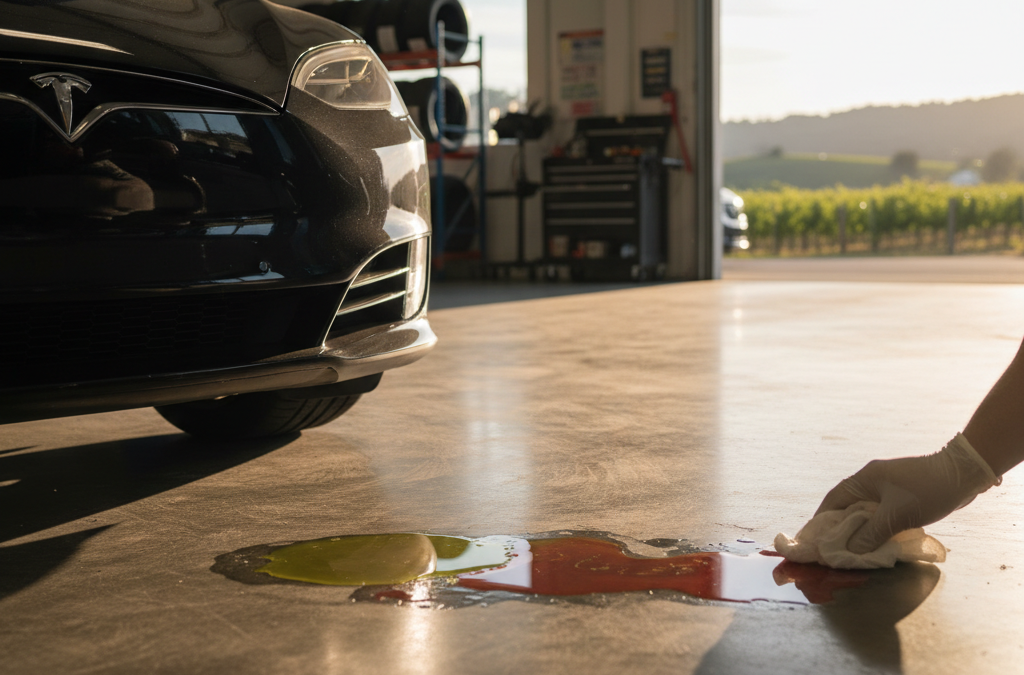
You walk out to your car in the morning, glance down at the driveway, and there it is — a small puddle sitting right where your engine was. If you’re in Petaluma, Rohnert Park, or anywhere in Sonoma County, you’re not alone. Fluid leaks are one of the most common reasons drivers contact us at On Site Auto Repair in the Petaluma and Santa Rosa area, and the good news is that most leaks can be diagnosed pretty quickly once you know what to look for. The bad news? Ignoring them can turn a minor repair into a major one — or leave you stranded on the side of Highway 101.
Here’s a straightforward guide to help you figure out what’s leaking, where it’s coming from, and how urgently you need to deal with it.
The First Step: Look Before You Touch
Before you wipe anything up, take a good look at the puddle. There are three things you want to note: color, location under the vehicle, and smell. These three clues will tell you a lot about what system is leaking. Grab a piece of white cardboard or paper if you can — it makes the color much easier to read.
Also note whether the leak is happening while the car is sitting, while it’s running, or only after a drive. Some leaks only show up when the engine is warm and pressurized. Others are constant. Both matter.
Common Fluid Leaks — What Each One Looks and Smells Like
Brown to Black and Oily: Engine Oil
This is the most common leak we see, especially on higher-mileage vehicles. Engine oil is typically brown when fresh and turns darker — sometimes almost black — as it ages. It’ll feel slick between your fingers, and it usually drips from somewhere toward the middle or front of the engine bay.
Common sources include valve cover gaskets, oil pan gaskets, rear main seals, or the drain plug. A slow oil leak might not feel urgent, but losing oil quietly over time is one of the fastest ways to damage your engine. If your dipstick is consistently reading low between oil changes, a leak is likely the culprit. Don’t wait on this one.
Pink, Red, or Brown and Thin: Transmission Fluid or Power Steering Fluid
Transmission fluid is usually red or pink when it’s fresh, and it tends to drip from the center of the vehicle — roughly under the transmission or toward the differential. It has a slightly sweet, oily smell. Older fluid can turn brown and look similar to engine oil, so location matters a lot here.
Power steering fluid is also typically reddish and thin, but it tends to drip toward the front of the vehicle, near the steering rack or pump. If your steering has started to feel stiff, groan when you turn, or shudder at low speeds — that’s a red flag that your power steering fluid is low due to a leak.
Transmission leaks are something you want addressed sooner rather than later. Running low on transmission fluid can cause slipping, rough shifts, or in severe cases, total transmission failure. That repair is significantly more expensive than fixing a gasket or seal.
Bright Green, Orange, or Yellow: Coolant (Antifreeze)
Coolant is hard to miss — it’s usually bright green, orange, pink, or sometimes blue depending on the type, and it has a distinctly sweet smell that some people describe as almost candy-like. It’s also slippery and slightly syrupy compared to water.
Coolant leaks can come from a cracked radiator, a loose or failed hose, a bad water pump, or a failing head gasket. If you see coolant pooling under the front of your vehicle, especially after the engine has warmed up, treat it as urgent. Petaluma summers get warm, and Santa Rosa’s heat doesn’t let up much either — an engine running low on coolant will overheat fast in those conditions, and overheating can cause serious, expensive engine damage in a short amount of time.
One more thing: if you notice a sweet smell inside the car with no visible puddle outside, your heater core might be leaking internally. That’s a separate (and messier) problem worth getting looked at.
Clear and Watery: Probably Not a Problem — Unless It’s Not Water
Clear fluid under your car is usually just condensation from the AC system, especially on warm days after running the air conditioning. This is completely normal. If it’s dripping from near the passenger side firewall area, that’s almost certainly just AC condensate drain — nothing to worry about.
However, clear fluid at the wrong location — say, near a wheel — could be brake fluid, which can sometimes appear nearly colorless. Check with your fingertip: brake fluid has a slightly chemical, almost glycol-like smell and feels slightly oily. If it’s near a wheel, that’s serious. Keep reading.
Clear, Oily, Near a Wheel: Brake Fluid — Stop Driving Immediately
This is the one fluid leak where we’ll tell you plainly: do not drive the vehicle until you’ve had it inspected. Brake fluid leaking from near a wheel — usually from a brake caliper, wheel cylinder, or brake line — means your braking system is compromised. Brake fluid is typically clear to light yellow and has a distinct chemical smell.
If your brake pedal feels soft, spongy, or goes closer to the floor than usual, and you’re seeing fluid near a wheel, pull over safely and call for help. This is not a “I’ll deal with it next week” situation. Brake system integrity is non-negotiable, and a failing brake line on Highway 101 or winding Sonoma backroads is genuinely dangerous.
Why This Topic Gets Glossed Over — And Why It Matters
Most local auto repair websites we’ve come across in Sonoma County list fluid leak repair as a service, but few actually explain how to identify what’s leaking or whether it’s safe to drive. That leaves you searching around while the puddle under your car gets bigger. Our goal has always been to give you the honest information you need to make a good decision — not to create anxiety or rush you into the shop unnecessarily, but also not to downplay something genuinely urgent.
If you’re not sure what you’re looking at, take a photo of the puddle and the area it’s dripping from, and give us a call or send it our way. We’ve been doing this in Santa Rosa and across Sonoma County since 2011, and we can usually help you figure out what you’re dealing with before you even come in.
A Note for Drivers in Cotati, Rohnert Park, and Along the 101 Corridor
If you’re commuting from Petaluma or Cotati up to Santa Rosa — or making the longer run down to Marin County — fluid leaks tend to get worse under driving conditions. A slow drip while parked can become a faster leak once the engine is under load and the system is pressurized. If you’ve noticed a puddle but the car seems to be running fine right now, don’t assume you can delay. Check your fluid levels before your next long drive, and if anything is notably low, have it looked at before you’re on the freeway far from help.
At On Site Auto Repair, we offer free estimates and honest diagnostics — we’ll tell you what’s leaking, where it’s coming from, and what it’ll take to fix it without padding the quote.
Frequently Asked Questions
Is it safe to drive with a fluid leak?
It depends entirely on which fluid is leaking. A very slow oil drip on a vehicle with full oil levels might be okay for a short drive to the shop. Brake fluid near a wheel is never safe to drive on. Coolant leaks can cause rapid overheating. When in doubt, check your fluid levels first, and if anything is low — especially brake fluid — don’t drive it.
How do I tell oil from transmission fluid?
Both can look dark brown or black on older vehicles. The location is your best clue: oil typically drips from under the engine (front to middle), while transmission fluid drips from further back, near the transmission housing. Transmission fluid is also usually thinner and may still show a reddish tint even when it’s dirty.
My car leaks a little and has for years — do I really need to fix it?
If it’s been going on for a while without getting worse and your fluid levels are consistently staying in the normal range, the risk is lower. But “a little” leaks have a habit of becoming “a lot” leaks without warning, especially as gaskets age. We’d recommend at least getting it looked at so you know what you’re dealing with.
How much does it cost to fix a fluid leak?
It varies widely depending on the source. A leaking valve cover gasket is a relatively straightforward repair. A leaking rear main seal or head gasket is significantly more involved. That’s why we always start with a proper diagnosis before quoting anything — you deserve an accurate estimate, not a guess.
Does On Site Auto Repair work on all vehicle makes and models?
Yes — we work on Toyota, Honda, Subaru, Ford, Chevrolet, Nissan, Lexus, Hyundai, Kia, Mazda, Volkswagen, and many more. If it drives, we can usually help.
Not Sure What’s Leaking? Let’s Figure It Out Together.
You don’t have to become an amateur mechanic to protect your vehicle. If you’ve got a puddle, a low fluid warning, or something that just doesn’t look right under your car — bring it in or give us a call. We’re based in Santa Rosa and serve drivers throughout Sonoma County, including Petaluma, Rohnert Park, Cotati, and beyond. We’ll give you a straight answer, a free estimate, and no pressure. Contact On Site Auto Repair today and let’s get it sorted out before a small leak becomes a big repair.