
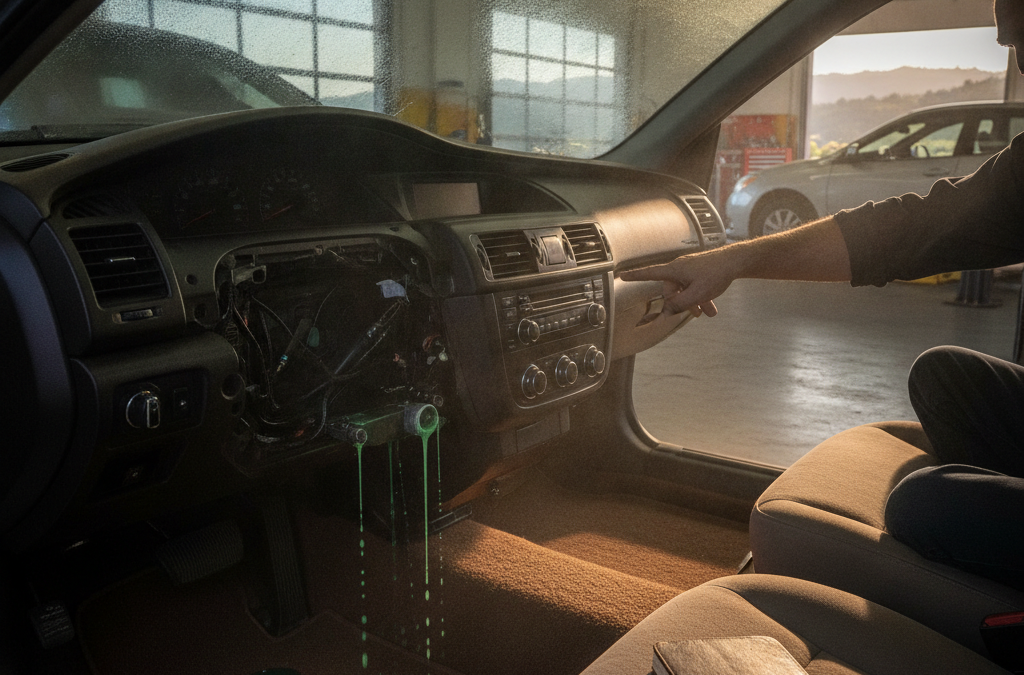
Why Is My Car’s Heater Core Leaking in Sebastopol? What Sonoma County Drivers Need to Know About This Hidden Problem
If you’ve noticed a sweet, syrupy smell inside your car, a windshield that keeps fogging up no matter how many times you wipe it, or a wet and sticky carpet on the passenger side, there’s a decent chance your heater core is leaking. It’s one of those problems that’s easy to overlook at first — but in Sebastopol and the surrounding Russian River Valley, where cool and damp mornings are practically a way of life from October through April, a failing heater core can go from minor annoyance to real headache fast. Here’s what’s actually going on, why it matters more than people think, and what you should do about it.
What Is a Heater Core, and Why Does It Leak?
The heater core is a small radiator-like component tucked inside your dashboard, usually behind the glove box or center console. Hot coolant from your engine circulates through it, and your blower fan pushes air across it to warm up the cabin. It’s connected directly to your cooling system, which means a leak in the heater core is also a cooling system leak — just happening inside your car instead of underneath it.
Heater cores fail for a few reasons. Age and corrosion are the most common culprits, especially in vehicles that haven’t had their coolant flushed on a regular schedule. Old, acidic coolant eats away at the core’s thin metal tubing from the inside. Physical damage — like a road impact or a sharp temperature swing after overheating — can also cause the core to crack or develop pinholes. And in older vehicles with higher mileage, the rubber hoses that connect the heater core to the engine can deteriorate and leak at the fittings.
Warning Signs Your Heater Core Is Leaking
Some of these symptoms are subtle at first, which is exactly why so many drivers in Sebastopol, Graton, and Forestville drive around with a slow heater core leak for weeks before realizing what’s happening.
- Sweet smell inside the cabin: Coolant has a distinct, slightly sweet odor. If you smell it inside your car — especially with the heat running — that’s a red flag.
- Foggy windshield that won’t clear: A leaking heater core releases coolant mist into the cabin air. That mist coats the inside of your windshield with a greasy, hard-to-wipe film that keeps coming back no matter how often you run the defroster.
- Wet or damp carpet on the passenger floor: This is often the most obvious sign. Coolant pooling under the dash drips down to the floor mat. It may feel oily or leave a slight stain.
- Coolant level dropping with no visible leak under the car: If you’re topping off your coolant reservoir regularly but can’t find a puddle in the driveway, the leak may be going into your cabin instead of onto the ground.
- Heater suddenly blowing less warm air: If the heater core has a significant leak, there’s not enough coolant circulating through it to heat the cabin properly — so the air coming out of your vents feels cooler than it used to.
- Engine running hotter than normal: Because the heater core is part of the cooling circuit, a substantial leak can affect your engine temperature. Keep an eye on the temperature gauge.
Why Sonoma County’s Climate Makes This Problem Worse
Sebastopol and the communities west of Santa Rosa — Occidental, Forestville, Graton — sit in one of the coolest, foggiest pockets of Sonoma County. From late fall through spring, mornings are regularly in the 40s and 50s, and you’re running your heater and defroster almost every single day. That constant thermal cycling — coolant heating up and cooling down repeatedly — puts real stress on an aging heater core.
On top of that, many drivers in the area tend to hold onto their vehicles longer, especially with the cost of new cars being what it is right now. Older Toyotas, Hondas, Subarus, and trucks with 120,000 or 150,000 miles are perfectly normal in this part of Sonoma County. The longer a heater core goes without a coolant flush, the more likely it is to corrode from the inside out.
If your vehicle is more than eight years old and you can’t remember the last time the coolant was changed, that’s worth checking — before you end up with a bigger problem on your hands. Our cooling system service includes a full inspection of the heater core connections and coolant condition, not just a simple flush.
How Serious Is a Heater Core Leak, Really?
It depends on how fast it’s leaking. A very slow seep might not seem urgent, but there are a few reasons not to put it off:
- Coolant is toxic to animals and children. If it’s soaking into your carpet, that’s a health concern.
- Coolant-soaked carpet and insulation under the dash can grow mold and mildew — especially in Sebastopol’s damp winter air.
- A slow leak becomes a faster leak. What starts as a pinhole can open up quickly.
- If coolant gets low enough, your engine can overheat — and that’s a much more expensive repair than fixing the heater core itself.
- That greasy film on your windshield is a visibility hazard, plain and simple. It’s especially dangerous driving toward the morning sun on Highway 116 or winding roads through the Russian River Valley.
What Does Heater Core Repair Actually Involve?
Here’s the honest answer: heater core replacement is one of the more labor-intensive jobs in automotive repair, and the labor cost reflects that. In most vehicles, the heater core is buried deep behind the dashboard. Getting to it typically means removing the entire dashboard assembly, which is a multi-hour job even for an experienced technician.
The actual heater core part itself is often not that expensive — the cost is in the labor. The total can vary significantly depending on your make and model. Some vehicles are designed in a way that makes the job more accessible; others are notoriously difficult. If you have a Honda, Toyota, Subaru, or domestic truck, the timeline and cost will differ. Always get a clear written estimate before any work starts.
There are stop-leak additives marketed as a quick fix for heater core leaks. We’ll be straight with you: these products occasionally slow a very minor leak temporarily, but they can also clog passages in your cooling system and cause more problems down the line. They’re not a real repair.
What About Bypassing the Heater Core?
Some shops will offer to bypass the heater core — essentially connecting the two hoses together and routing coolant around it entirely. This stops the leak and keeps the cooling system intact, but it also means you have no cabin heat and no defrost. That might be acceptable if you’re driving a summer-only project car, but for anyone commuting through Sebastopol or Occidental from October through March, it’s really not a practical long-term solution.
Can You Prevent Heater Core Failure?
Yes, to a meaningful degree. The single best thing you can do is stay on top of your coolant changes. Most manufacturers recommend a coolant flush every 30,000 miles or every two to three years, though that interval varies. Fresh coolant contains inhibitors that protect the metal inside your heater core and radiator. Old, depleted coolant is acidic and actively corrodes those surfaces.
If your vehicle is due for preventive maintenance and you’re not sure when the coolant was last changed, that’s an easy thing to check and address before it causes a bigger problem. You can learn more about what a full maintenance service looks like on our preventive maintenance page.
Frequently Asked Questions
Can I drive my car with a leaking heater core?
For a short distance, possibly — but not without risk. If the leak is slow, you may be okay for a day or two as long as you monitor your coolant level closely and watch the temperature gauge. But coolant in the cabin is a health hazard, visibility becomes compromised with the fogged windshield, and a low coolant level can lead to engine overheating quickly. We’d recommend getting it looked at same week, not same month.
My defroster isn’t working well. Could that be the heater core?
Possibly. If your defroster is pushing air but the windshield stays foggy or the inside glass has a greasy film, the heater core may be leaking coolant mist into the airflow. If the defroster just isn’t working at all, there could also be a separate issue with your blower motor or AC system. Either way, it’s worth diagnosing — especially heading into Sebastopol’s damp winter season.
How do I know if it’s the heater core or a windshield leak causing my wet carpet?
A windshield or door seal leak will typically produce clean water, especially after rain. A heater core leak will produce coolant — which has that slightly sweet smell and a slightly oily or slick feel compared to plain water. If the wet carpet is on the passenger side and has that sweet odor, the heater core is a strong suspect.
Does On-Site Auto Repair service heater cores on all vehicle makes?
Yes — we work on all makes and models, including Toyota, Honda, Subaru, Ford, Chevy, Nissan, Jeep, and many others. If you’re in Sebastopol, Rohnert Park, Petaluma, or anywhere in Sonoma County, we can help. We’ll give you an honest assessment of what the repair involves for your specific vehicle and a clear estimate before any work begins.
Is a heater core leak covered by my extended warranty or insurance?
It depends on your specific coverage. Extended warranties typically cover heater cores as part of the HVAC or cooling system, but policy terms vary. Comprehensive auto insurance generally does not cover mechanical failures. We’re happy to provide documentation of the failure if you need it for a warranty claim.
Get It Diagnosed Before It Gets Worse
A leaking heater core isn’t the kind of problem that gets better on its own, and Sonoma County winters — especially out in Sebastopol, Occidental, and the Russian River Valley corridor — are not the time to find out your defrost isn’t working properly. If you’re noticing any of the signs above, the smart move is to get it looked at now rather than in the middle of a cold, foggy January morning.
At On-Site Auto Repair, we’ve been diagnosing and repairing heater cores and cooling systems for drivers across Sonoma County since 2011. We give honest estimates, we don’t upsell you on things you don’t need, and we treat your car the same way we’d treat our own. Contact us to schedule a free estimate and let’s figure out exactly what’s going on with your heating system.